Timberwolf TW-PRO vs WoodMaxx WM-8T: Which Stands Up to Heavy-Duty Use?
When the firewood pile grows and the commercial orders stack up, a homeowner-grade splitter simply won’t cut it. The Timberwolf TW-PRO and WoodMaxx WM-8T are two heavy-hitters in the mid-to-commercial class, but they approach the work differently. This comparison digs into build quality, cycle speeds, hydraulic systems, and real-world ownership to help you decide which machine earns its keep on your lot.
How Do the Core Specs Compare Between the TW-PRO and WM-8T?
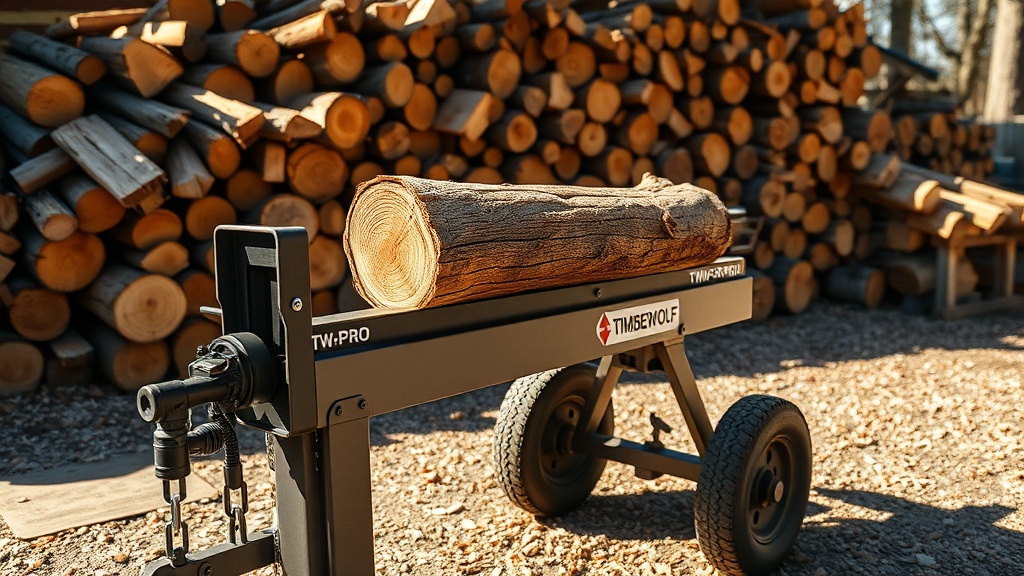
Timberwolf TW-PRO: 22-ton rating, 9.5 HP Kohler engine, 13 GPM two-stage hydraulic pump, 24-inch stroke, and a 6.5-second cycle time. The wedge rides on a greasable, hardened-steel beam, and the entire frame is welded from 3/16-inch steel plate.
WoodMaxx WM-8T: 20-ton rating, 8 HP Kohler engine, 11 GPM pump, 24-inch stroke, and a 7.2-second cycle time. Its beam is also steel, but the wedge assembly uses polymer slide pads—an area of debate in heavy-duty use.
| Specification | Timberwolf TW-PRO | WoodMaxx WM-8T |
|---|---|---|
| Rated Tonnage | 22 tons | 20 tons |
| Engine | 9.5 HP Kohler CH395 | 8 HP Kohler CH270 |
| Hydraulic Pump Flow | 13 GPM (two-stage) | 11 GPM (two-stage) |
| Cycle Time (Full Stroke) | 6.5 seconds | 7.2 seconds |
| Stroke Length | 24 inches | 24 inches |
| Beam Material | 3/16-inch steel plate | 3/16-inch steel plate |
| Wedge Material | Hardened steel, greasable | Hardened steel, polymer slide pads |
| Weight | 725 lbs | 680 lbs |
| Wheel Size | 16-inch pneumatic (turf) | 13-inch pneumatic (turf) |
| MSRP (USA) | $3,999 | $3,299 |
| Warranty | 3 years (structural) | 2 years (limited) |
Which Machine Handles Knotty and Stringy Wood Better?
Stringy, twisted oak and frozen knotty maple separate amateur gear from professional kit. The Timberwolf TW-PRO hydraulic system delivers higher flow (13 GPM vs 11 GPM) and a wedge that stays sharp through repeated abuse. Users report that the TW-PRO’s wedge shears through interlocking grain without needing to stop and reposition the wood. The WoodMaxx WM-8T struggles more with extreme stringiness—the polymer slide pads can bind under heavy side loads, requiring the operator to “baby” the log into the wedge.
Is the Build Quality Worth the Price Difference?
The Timberwolf TW-PRO retails for about $700 more than the WM-8T. That premium buys thicker beam construction (the TW-PRO beam is actually slightly heavier-gauge in critical weld areas), a greasable wedge pivot, and a larger-diameter hydraulic cylinder (4-inch bore vs 3.75-inch). Timberwolf also welds all seams with a continuous bead; WoodMaxx uses a stitch-weld pattern on the beam-to-axle mount. In heavy use, stitch-welded frames have been known to develop hairline cracks after 3–5 years of commercial operation. The TW-PRO’s continuous welds and heavier cylinder bore make it better suited for daily splitting.
How Do Day-to-Day Operation and Cycle Speeds Compare?
Cycle time is critical when you have a mountain of logs to process. The TW-PRO cycles in 6.5 seconds end to end—about 10% faster than the WM-8T’s 7.2 seconds. Over a full day of splitting 2–3 cords, that difference adds up to 30–45 minutes saved. The TW-PRO also uses a larger fuel tank (2.2 gallons vs 1.6 gallons), so refueling stops are less frequent. The WoodMaxx, however, is slightly lighter (680 lbs vs 725 lbs), which makes it easier to tow behind smaller trucks or SUVs. For stationary use, the TW-PRO’s weight contributes to stability when splitting large rounds.
What Do Long-Term Maintenance and Durability Tell Us?
Both machines require regular maintenance: checking hydraulic fluid levels, greasing beam surfaces, changing engine oil, and inspecting belts. The Timberwolf TW-PRO maintenance schedule calls for greasing the wedge pivot every 8 hours of operation and checking hydraulic filter condition every 50 hours. The WoodMaxx requires polymer slide pad replacement every 100–150 hours in heavy use—an added consumable cost of roughly $40 to $60 per set. Timberwolf’s wedge uses replaceable wear strips on the bottom, but the beam itself is designed to be regreased, not to wear out through sliding contact. Over five years of commercial use (roughly 1,500 hours), the TW-PRO typically requires only cylinder seal kits and engine tune-ups; the WM-8T often needs at least one pump rebuild and two sets of slide pads.
Which Machine Has Better Accessory and Upgrade Support?
Timberwolf has a broad ecosystem of factory-backed accessories, including log lifts, cant hooks, and the Timberwolf TW-PRO accessories to boost productivity. The Timberwolf TW-PRO hydraulics upgrade kit allows operators to increase pump flow to 16 GPM, reducing cycle time to 5.8 seconds. There is also a Timberwolf TW-PRO upgrade kit that enhances the return spring assembly for more consistent operation. WoodMaxx offers a log lift as an add-on, but first-party upgrade kits for the hydraulic system are not available—any flow increase would require aftermarket modifications that void the warranty. For operators planning to push the machine harder in future seasons, the TW-PRO’s upgrade path is clearly superior.
What Owners Say
Timberwolf TW-PRO owners consistently praise its ability to “walk through gnarly elm and locust without stopping.” One contractor in Maine reports processing over 300 cords in three years with only routine maintenance. The greasable wedge beam gets frequent mention—“no slide pads to burn through.” Complaints are rare but focus on the weight: moving it around the yard without a tractor can be a two-person job.
WoodMaxx WM-8T owners appreciate the lower price point and solid performance on straight-grained wood. “For $3,299, it’s hard to beat for weekend firewood,” says an Ohio homeowner. However, several commercial users note the polymer pad wear and occasional beam flex under heavy side loads. “If you split 5 cords a year, the WM-8T is fine. If you do 50, save up for the TW-PRO,” sums up a Wisconsin logger.
Frequently Asked Questions
1. Can the Timberwolf TW-PRO split over-sized rounds?
Yes. With a 24-inch stroke and 22 tons, it can handle rounds up to 26 inches in diameter if they are stable on the beam. For larger pieces, operators should pre-split with a maul or use a log lift.
2. How does the warranty compare between the two?
Timberwolf offers a 3-year structural warranty on the beam and frame; WoodMaxx offers a 2-year limited warranty covering parts but not labor. The longer warranty reflects Timberwolf’s confidence in its continuous-weld design.
3. Can I tow the TW-PRO with a standard SUV?
At 725 lbs, the TW-PRO is towable by most mid-size SUVs and trucks with a 2,000-lb capacity hitch. The WoodMaxx at 680 lbs is slightly easier to move, but neither requires a heavy-duty tow vehicle.
4. Are replacement parts easy to find for both machines?
Both brands have good parts support. Timberwolf parts are stocked by most regional dealers and can be ordered online. WoodMaxx parts are also available but may have longer lead times for custom items like slide pads.
5. Which machine is better for splitting very hard woods like hickory or ironwood?
The TW-PRO’s higher tonnage (22 vs 20) and faster cycle time give it an edge. The greasable wedge also reduces friction on hard, dense wood. The WM-8T can handle these woods but will be slower and wear its wedge pads faster.
6. Is the Timberwolf TW-PRO worth the extra money for a small firewood business?
Yes. For a small business splitting 50–100 cords annually, the $700 premium pays for itself in reduced downtime, longer service intervals, and better resale value. The Timberwolf TW-PRO vs Fransgård TC-10 comparison also highlights that the TW-PRO is a step up in the same price bracket.