WoodMaxx WM-8T Safety Tips: Avoiding Common Injuries
The WoodMaxx WM-8T is a capable firewood processor, but like any piece of heavy machinery, it demands respect. Missteps with its 22-ton split force, 7.5 HP engine, and conveyor can lead to serious injuries. This article outlines the most common safety pitfalls owners face and how to sidestep them, based on field experience and owner reports.
Why Does the WoodMaxx WM-8T Require Specific Safety Precautions?
The WM-8T combines a hydraulic log lift, an auto-cycle splitter, and a conveyor in a compact frame. That density means moving parts are close together. The log lift can pinch fingers if you’re not paying attention. The splitter wedge operates with enough force to crush bone instantly. The conveyor’s chain and belt can catch loose clothing. Unlike a standalone splitter, you have multiple hazards in one small work zone. These aren’t generic warnings—they’re specific to the WM-8T’s design.
What Is the Most Common Injury with the WoodMaxx WM-8T?
Finger and hand injuries from the log lift. The WM-8T’s log lift uses a hydraulic arm that swings up and dumps logs onto the splitter bed. If you place a log by hand near the lift’s pivot point, your fingers can get caught between the log and the frame. Owners report this happens when trying to “guide” a crooked log into the cradle. The fix is simple: use a push stick or a cant hook to adjust logs on the lift. Never let your hands enter the space between the lift arm and the machine’s body. The lift operates fast—under two seconds for a full cycle—leaving no time to react.
Another frequent injury: getting a hand caught under a log on the splitter bed. When a large round rolls off the cradle, people instinctively try to catch it. The WM-8T’s splitter wedge can cycle automatically if the two-hand control is engaged. If your hand is under the log when the wedge comes down, the result is a crush injury. Always use the log cradle’s retaining pins, and keep hands clear until the splitter cycle is complete.

How Can You Avoid Conveyor Entanglement Injuries on the WM-8T?
The conveyor on the WM-8T is a chain-driven, belt-covered system that moves split wood away from the machine. It runs continuously while the engine is running. The pinch point is where the belt meets the drive roller at the front end. Loose sleeves, drawstrings, or even long hair can get pulled into that gap in a split second. The manual instructs you to keep clothing snug and hair tied back. But owners often ignore this until they have a close call. One owner on the forums reported his hoodie drawstring was sucked into the roller, pulling his head toward the chain. He managed to kill the engine but had to cut the hoodie off. The conveyor runs at about 80 feet per minute. That’s slow enough to drag you in but fast enough to cause injury before you can react.
Best practice: wear a tight-fitting, short-sleeved shirt or a jacket with no exposed cords. If you have long hair, put it under a hat or a bandana. Never reach toward the conveyor while it’s moving, even to clear a jam. Always shut the engine off and wait for the belt to stop completely—about five seconds after the engine cuts—before reaching near the roller.
What About Kickback and Log Ejection Hazards?
The WM-8T uses a 22-ton splitter with a 6-inch-wide wedge. When splitting knotty or twisted wood, the wedge can deflect, causing the log to rotate or kick backward. This kickback can throw a split piece at your legs or torso. It’s not as dramatic as a chainsaw kickback, but a 20-pound piece of oak hitting your shin at speed can break a bone. The WM-8T has a safety shield over the splitter area, but some owners remove it for easier loading. That’s a mistake. Always keep the shield in place. Also, stand to the side of the splitter bed, not directly behind the log, as the direction of kickback is unpredictable. Use a log stand or a helper to stabilize off-center rounds before splitting.
How Do You Safely Transport the WoodMaxx WM-8T?
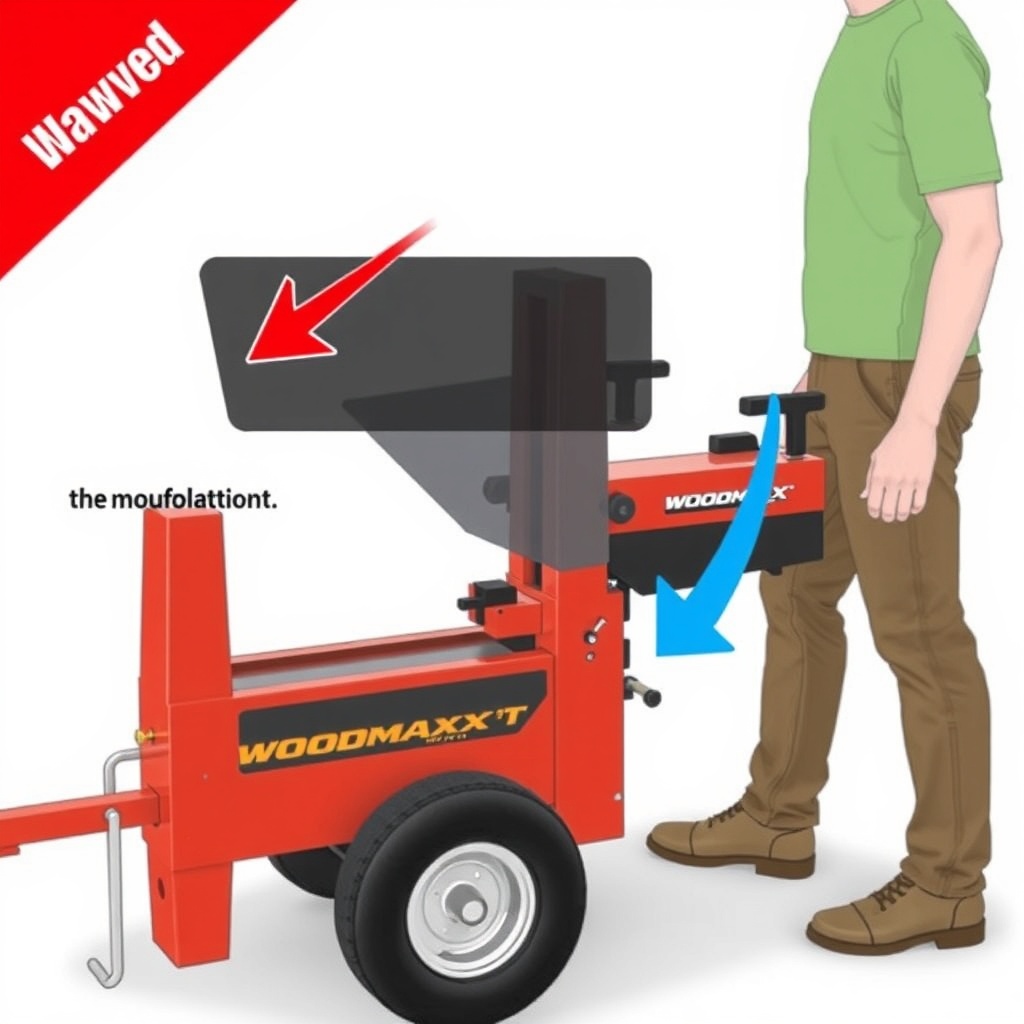
The WM-8T is a towable unit with a 2-inch coupler and a GVWR of 1,900 pounds. Towing it at speed can cause trailer sway if the unit is unbalanced. The most common transport injury isn’t from a crash—it’s from the tongue jack handle slipping. When you disconnect the WM-8T from a vehicle, the tongue jack must be fully cranked down to support the weight. If the jack is only partially deployed, the machine can tip forward, dropping the tongue onto your foot. That’s a 1,900-pound impact. Always chock the wheels before unhitching, and wear steel-toed boots. Also, ensure the conveyor is folded and pinned before travel. A loose conveyor bouncing on the highway can shift the center of gravity.
What Maintenance Safety Steps Are Often Overlooked?
Two areas: hydraulic fluid burns and pinch points on the splitter wedge. The WM-8T’s hydraulic system runs at 2,200 PSI. If you open a line without relieving pressure first—by cycling the splitter fully with the engine off—you can get sprayed with hot fluid. That can cause burns or eye damage. Always wear safety glasses when working on the hydraulics. Second, the splitter wedge is heavy—about 40 pounds. If you remove it for sharpening, support it with a block. One owner dropped his wedge on his thumb while reinstalling it and needed stitches. Use two hands and a helper when handling the wedge.
| Severity Level | Common WM-8T Injuries | Immediate Action |
|---|---|---|
| Needs Attention Soon | Log lift pinch (finger bruising, minor cuts) Conveyor belt friction burns (minor) Kickback bruises (leg or foot) |
Clean wound, apply bandage, monitor for infection. For bruises, rest and ice. Evaluate if you’re using proper push sticks and staying out of danger zones. |
| Usually Not Urgent but Can Escalate | Hydraulic fluid spray (no burn) Wedge handle abrasion Log lift arm scrape (mild) |
Flush skin or eyes with water. Inspect for deeper injury. Check hydraulic lines for leaks. Address the cause (e.g., replace worn O-rings) to prevent recurrence. |
| Needs Attention Soon | Crush injury from wedge (fingers or hand) Conveyor entanglement (arm or torso) Log falling on foot (possible fracture) |
Call 911. Do not move the machine or victim if pinned. Apply pressure to bleeding. Keep victim still until medical help arrives. These are serious. |
What Owners Say
Owner comments on the WM-8T’s safety often focus on the log lift and conveyor. One user on a forum wrote: “The lift is great but I nearly lost a finger trying to place a crooked log. Now I always use a stick. Took me one close call to learn.” Another noted: “I removed the conveyor shield to clean it faster and regretted it when my shirt sleeve got snagged. Lucky I killed the engine quickly. Please keep shields on.” A third said: “Towing is fine if you take it slow. I had a sway issue once because the tongue jack wasn’t fully down. Now I double-check before unhitching.”
Frequently Asked Questions
Q: Can I operate the WoodMaxx WM-8T alone safely?
A: Yes, the WM-8T is designed for single-operator use, but you need to be methodical. Use the two-hand control for the splitter, and always stand to the side of the log lift. A companion can help with large logs or emergencies.
Q: Do I need to wear a hard hat with the WM-8T?
A: Not mandatory for chainsaw setups, but if you are splitting overhead limbs or working near a tree, a hard hat is wise. For basic splitting from rounds on the ground, safety glasses, steel-toed boots, and gloves are the minimum.
Q: How often should I check the hydraulic fluid on the WM-8T?
A: Before every use. Low fluid can cause the splitter to operate unpredictably or not retract. Check the sight glass on the reservoir—it should be mid-level when the splitter is fully retracted.
Q: Can the WM-8T’s conveyor run in reverse to clear a jam?
A: No, the conveyor is forward-only. To clear a jam, shut off the engine, remove the key, and manually pull out the obstruction. Never reach in while the engine is running.
Q: Is the WoodMaxx WM-8T safe for teenage operators?
A: Under adult supervision, a responsible teen can operate it. But the WM-8T is not a toy. Hydraulic force and moving parts require full attention. Start with training on a manual splitter first.
Q: What is the most important safety upgrade for the WM-8T?
A: A good pair of cut-resistant gloves and a set of push sticks. Many owners also add a second-hand emergency stop button near the conveyor, though the factory kill switch on the engine is sufficient.
For more details on purchasing decisions, see our WoodMaxx WM-8T Buying Guide: Is It Worth the Investment? Compare this unit against the competition in our WoodMaxx WM-8T vs Timberwolf TW-PRO: Which Firewood Processor Wins? article. And for a deep dive into the machine’s guts, check WoodMaxx WM-8T Hydraulics & Splitting Force Deep Dive. Safety isn’t just about gear—it’s about knowing your machine.