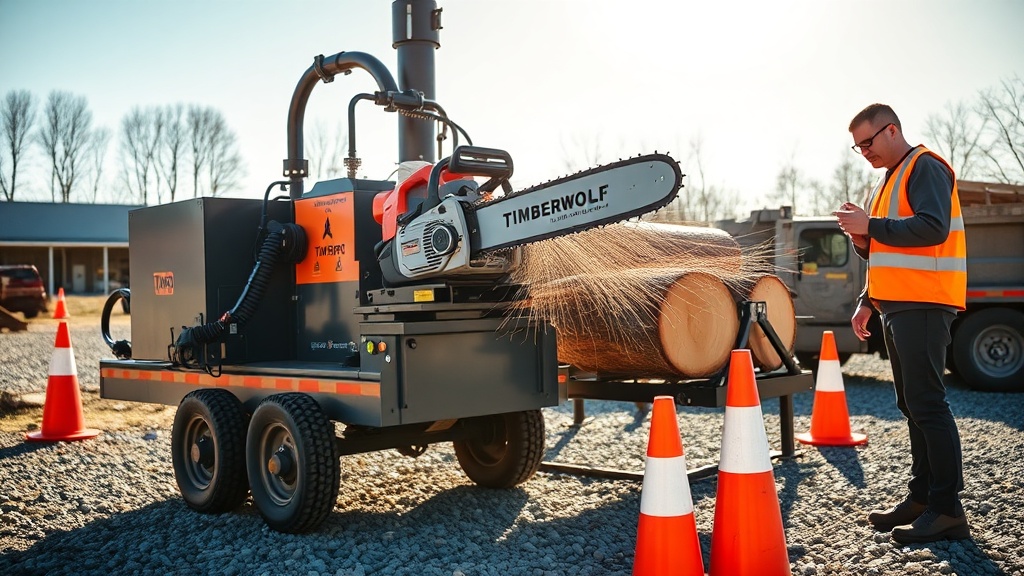
Timberwolf TW-PRO Safety Tips for Beginners and Pros
The Timberwolf TW-PRO is a heavy-duty firewood processor that demands respect, whether you’re splitting logs for the first time or managing a commercial operation. Proper safety practices are not optional—they are essential for preventing injury and maximizing machine longevity. This article covers critical safety protocols tailored to the TW-PRO, blending manufacturer guidelines with real-world operator insights.
From pre-operation checks to emergency procedures, every owner should integrate these safety tips into their routine. Beginners will find foundational advice, while seasoned pros can refine their approach to avoid complacency. Let’s break down the key safety considerations for this powerful firewood processor.
1. What Pre-Operation Checks Are Non-Negotiable on the Timberwolf TW-PRO?
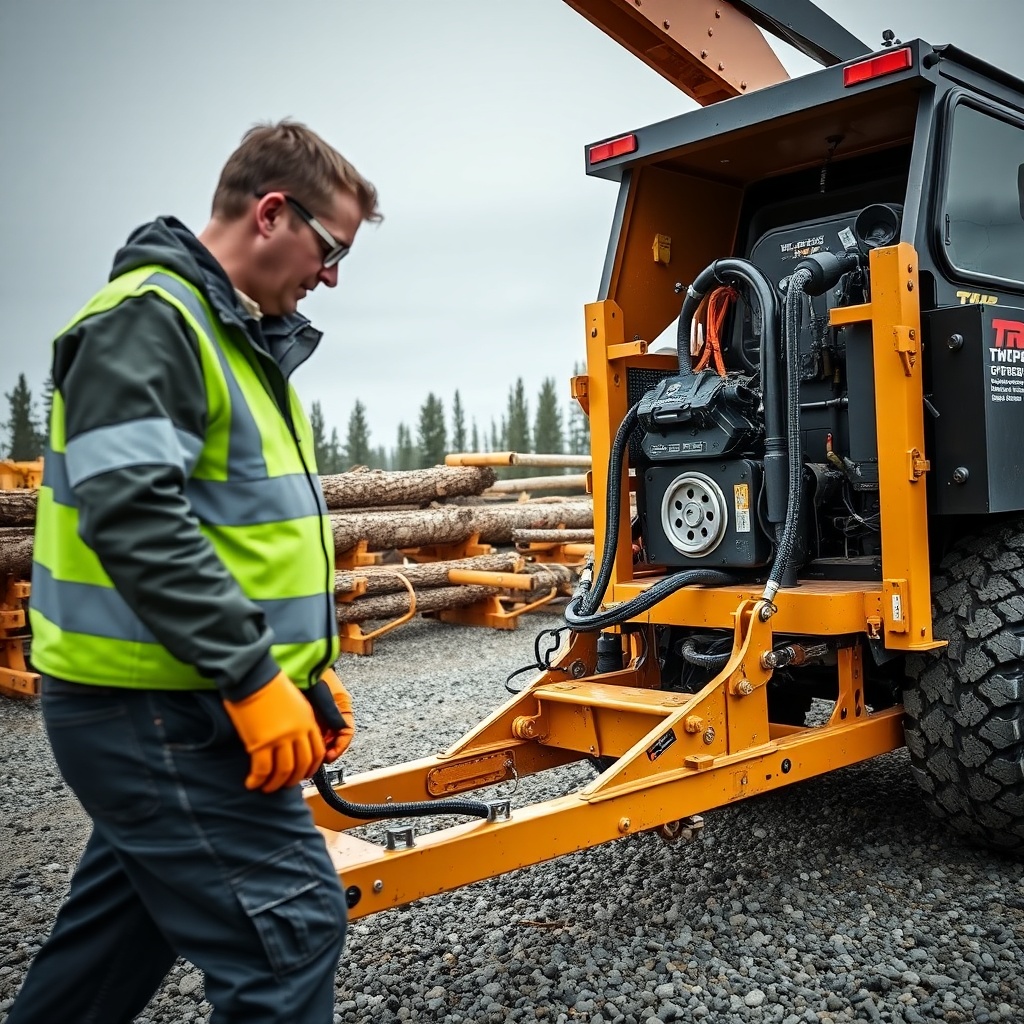
Before starting the TW-PRO, a systematic walk-around inspection is critical. The machine’s hydraulic system and cutting components operate at high pressures, so overlooking small issues can lead to dangerous failures. Always begin by checking the hydraulic fluid level and inspecting all hoses for leaks, cracks, or chafing. The operator’s manual recommends verifying that the wedge and chainsaw unit are free of debris and properly lubricated.
Next, confirm that all safety guards are in place and functioning. The TW-PRO includes a log lift interlock that prevents operation if the lift is not fully retracted. Test this feature by attempting to engage the cycle without the lift down. Additionally, inspect the chainsaw chain tension and bar oil reservoir—a loose chain can snap at high speeds, causing severe injury. For a detailed maintenance schedule, refer to the Timberwolf TW-PRO Maintenance Schedule: Keep It Running Smoothly guide.
Finally, ensure the machine is on stable, level ground. The TW-PRO weighs approximately 2,500 pounds when dry, and uneven terrain can cause tipping during log loading. Use wheel chocks if operating on a slope, and never attempt to operate the machine from a position that compromises your balance.
2. How Should You Operate the TW-PRO’s Controls Safely?
The TW-PRO uses a two-handed control system for the splitter cycle and a separate bar control for the saw. Never bypass these interlocks. The splitter control requires both hands on the levers to initiate the stroke, keeping your hands away from the wedge and log. For the chainsaw, engage the bar only when the log is securely positioned and the saw guard is clear.
A common mistake among beginners is attempting to feed logs into the saw while the splitter cycle is still active. This can cause the log to kick back unpredictably. Always complete the split first, then move to the saw cycle. Pros should note that the TW-PRO’s hydraulic system delivers 8 to 10 tons of splitting force, and the wedge stop—a mechanical limit—must be set correctly for the log length to avoid jamming or splitting beyond the safety zone.
Never wear loose clothing, jewelry, or gloves with long cuffs near the moving parts. Secure long hair, and always use ear protection—the TW-PRO produces noise levels around 85 decibels during full operation. For hydraulic safety specifics, see the Timberwolf TW-PRO Hydraulic System: Specs and Real-World Performance article.
3. What Are the Key Hydrostatic and Electrical Safety Hazards?
The TW-PRO’s hydraulic system operates at up to 3,000 psi. A pinhole leak in a hose can inject hydraulic fluid into skin, causing a condition known as injection injury, which requires immediate medical attention. Always relieve system pressure by cycling the control levers with the engine off before disconnecting any fittings. Use a piece of cardboard, not your hand, to search for leaks.
Electrical safety is equally important, especially for PTO-driven models. Ensure the tractor’s PTO shaft is properly shielded and the shear bolt is rated for the TW-PRO’s torque requirements. For the self-powered gasoline or diesel models, check the battery terminals for corrosion and ensure the exhaust system is free of flammable debris. The machine’s wiring harness should be inspected for rodent damage during off-season storage.
We recommend installing an aftermarket hydraulic pressure gauge to monitor system health. The Timberwolf TW-PRO Hydraulics Upgrade Kit: Boosting Performance review discusses how upgraded components can also improve safety margins by reducing strain on stock parts.
4. How Do You Safely Handle Log Loading and Jams?
Loading logs into the TW-PRO is the most physically demanding—and risky—phase of operation. Never straddle the log lift or stand in its path. Use your leg muscles, not your back, to roll logs onto the bed. For logs over 24 inches in diameter, use a cant hook or a mechanical loader attachment to reduce physical strain. The TW-PRO’s log lift can handle up to 30-inch diameter by 20-foot logs, but jams are common if the log is not aligned with the chain bed.
If a log jams in the saw or splitter, follow these steps: First, turn off the engine and disengage the PTO (if applicable). Wait for all moving parts to come to a complete stop. Then, use a wooden pry bar or a gloved hand to carefully free the log—never use metal tools near the chainsaw bar. Disconnect the spark plug wire before reaching into the saw area to do any deeper clearing.
For pros dealing with high-volume production, consider adding accessories that improve loading ergonomics. The Timberwolf TW-PRO Accessories to Boost Productivity page covers log deck extensions and hydraulic lifts that reduce manual handling.
| Hazard | Common Cause | Severity | Prevention |
|---|---|---|---|
| Chainsaw kickback | Dull chain or incorrect tension | High (laceration) | Check chain monthly; sharpen every 3 hours of use |
| Hydraulic fluid injection | Pinched hose or pinhole leak | Critical (amputation risk) | Use cardboard to detect leaks; depressurize before service |
| Log rollback | Overloaded log lift or uneven log | Medium (crush injury) | Load one log at a time; use lift interlock |
| PTO entanglement | Missing or damaged shield | High (entanglement) | Inspect shield daily; replace damaged hardware |
5. What Are the Best Practices for Transport and Storage Safety?
Moving the TW-PRO between sites introduces unique risks. The machine is heavy and tall when mounted on a trailer. Ensure the trailer has a minimum 7,000-pound GVWR and that the TW-PRO is centered over the axles. Use at least four tie-down straps rated at 2,500 pounds each, and secure the log lift in the upright position with a locking pin. Never transport with fuel in the tank—gas fumes can ignite in an enclosed trailer.
For storage, choose a dry, ventilated area. The TW-PRO’s chainsaw bar and chain should be removed and stored in oil—or coated in rust inhibitor—if the machine will sit for more than 30 days. Cover the hydraulic reservoir breather cap to prevent moisture ingress. Disconnect the battery if storing for winter.
When positioning the TW-PRO for the first use of the season, perform a full operational check in a safe area away from structures or combustible materials. Test the automatic chain oiler and the wedge stop before processing any wood.
6. What Do Owners Say About Safety on the Timberwolf TW-PRO?
Experienced owners consistently highlight the machine’s predictable behavior when maintained properly. “The TW-PRO runs like a clock if you stick to the hydraulic flush schedule,” says Mike T., a commercial firewood producer in Vermont. “One year I skipped the end-of-season hydraulic oil change, and the next spring the wedge action was jerky. That’s a safety red flag for me.” Another owner, Sarah J. from Oregon, notes that the log lift interlock has saved her from injury multiple times when logs shifted unexpectedly.
Beginners often comment on the learning curve for the dual-control system. “At first, I was frustrated by the two-hand splitter control. But after a few weeks, I realized it forces you to be deliberate. Now I wouldn’t want it without,” says John K. of Maine. Several owners recommend installing a Timberwolf TW-PRO Hydraulics Upgrade Kit: Boosting Performance Real-World Results to improve valve response, which some say reduces accidental cycle engagement.
The most common safety concern among owners is chainsaw chain breakage. The factory chain is adequate, but many upgrade to a carbide-tipped loop for longer life and less breakage risk. Pros emphasize that the chain guard must always be used—even if it slows down knot removal. As one owner puts it, “The five seconds it takes to take the guard off is not worth the hospital visit.”
Frequently Asked Questions
Q1: What is the TW-PRO’s splitter cycle time?
A1: The standard cycle time is about 8 seconds for a 24-inch stroke, but it varies with hydraulic temperature. Keep the system at operating temperature for consistent performance.
Q2: Can I operate the TW-PRO in wet conditions?
A2: Avoid operation in rain or snow. Wet wood can slip on the chain bed, and moisture increases the risk of electrical shorts on self-powered models. Wait for dry conditions.
Q3: How often should I replace the hydraulic fluid?
A3: Change every 200 hours of operation or annually, whichever comes first. Use a high-quality AW-32 hydraulic fluid for best results.
Q4: Is it safe to split softwoods like pine?
A4: Yes, but reduce the wedge speed when splitting softwoods. The TW-PRO’s hydraulic system can be adjusted via the flow control valve—refer to the manual for settings.
Q5: What should I do if the chainsaw bar bends during operation?
A5: Immediately stop the machine and inspect for foreign objects. A bent bar indicates significant impact; replace it before restarting. Always check the chain tension after a jam.
Q6: Are there any aftermarket safety modifications worth considering?
A6: Yes. A hydraulic pressure gauge (as mentioned earlier) and an emergency stop switch tied to the PTO engagement are popular upgrades. Some owners also add reflective tape to the log lift for low-light visibility.
For comparison with other models, see the Timberwolf TW-PRO vs WoodMaxx WM-8T: Which Stands Up to Heavy-Duty Use? article to evaluate safety features side by side.