Introduction
Operating a WoodSplitPro firewood processor demands more than just raw power—it requires disciplined safety and consistent seasonal maintenance. This checklist provides a structured guide to inspect hydraulic lines, check splitter wedges, and verify engine systems before each working shift, ensuring both operator safety and machine longevity. By following these actionable steps, owners can reduce downtime and avoid costly repairs during peak processing seasons.
How Should Operators Prepare the Work Area Before Starting?
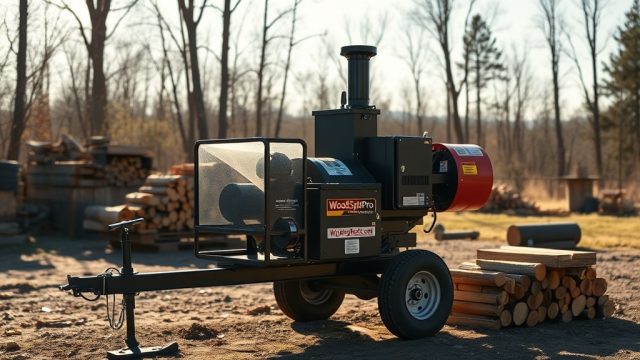
Before engaging the engine or moving any logs, confirm that the work area is clear of debris, uneven ground, and bystanders. Position the WoodSplitPro on a level, stable surface—preferably concrete or compacted gravel—and chock the wheels if using a towable model. Ensure the exhaust outlet faces away from flammable materials like dry leaves or sawdust piles. Operators must wear ANSI-certified eye protection, hearing protection rated for at least 25 dB reduction, and steel-toed boots. Gloves should be cut-resistant but not loose-fitting near rotating parts.
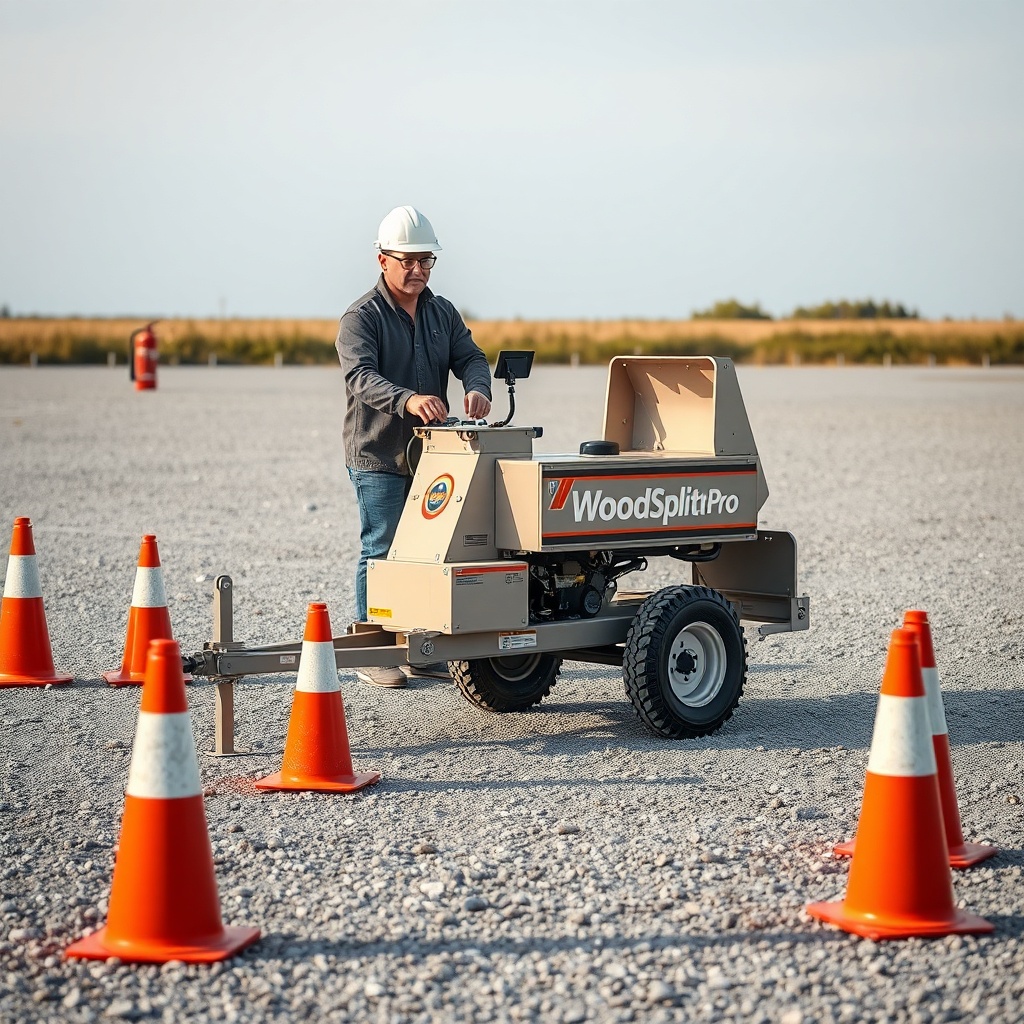
Keep a fire extinguisher rated Class A, B, and C within 15 feet (4.5 m) of the processor. Establish a “no-go zone” of at least 10 feet (3 m) around the conveyor and splitting wedge, marked by bright safety cones or tape. For operators working alone, a cell phone or two-way radio should be within arm’s reach in case of emergency.
What Are the Critical Hydraulic System Checks?
The hydraulic system is the heart of any WoodSplitPro unit, and neglecting it invites catastrophic failure. Begin each season by visually inspecting all hoses for cracks, bulges, or abrasions—especially near crimp fittings and connection points to the pump, control valve, and cylinder. Tighten any loose fittings to the manufacturer’s torque specification (typically 25 to 35 ft-lb for JIC 37° flare connections).
Check the hydraulic fluid level with the cylinder fully retracted. The reservoir should be filled to the upper sight glass mark with AW-32 or ISO 32 hydraulic oil (check your owner’s manual for exact spec). Replace the return-line filter annually—more often if the fluid appears cloudy or dark. A clogged filter causes cavitation and ruins the pump within hours. Test the system pressure with a gauge; a healthy WoodSplitPro operates between 2,000 and 2,500 psi (138 to 172 bar) at idle, with relief valve cracking at 2,800 psi (193 bar).
Finally, grease all pivot points and the wedge slide rails with a lithium-based grease (#2 NLGI) every eight hours of operation. This prevents scoring on the cylinder rod and ensures smooth wedge action.
How to Inspect Splitting Wedge and Conveyor Systems?
The splitting wedge must be sharp and free of chips or cracks. A dull wedge strains the hydraulic system and produces crooked splits. Use a file or angle grinder to dress the edge back to a 30-degree bevel—do not overheat the steel or you risk losing hardness. On a 4-way wedge, confirm that each blade section is tightly bolted and aligned. Torque all wedge bolts to 45 ft-lb (61 Nm) for standard 3/8-inch grade 8 hardware.
Inspect the conveyor belt for tracking and tension. The belt should ride centered on the rollers with no more than 1/4 inch (6 mm) of lateral wander. Adjust the take-up bolts evenly—overtightening leads to bearing failure. Check that all roller bearings spin freely; replace any that feel gritty or noisy immediately. Clean spilled wood chips from under the conveyor daily to prevent belt drag and fire risk. The feed chute must be free of foreign objects like nails or stones, which can damage the wedge or toss debris dangerously.

What Engine and Electrical Checks Are Needed?
Gasoline and diesel engines on WoodSplitPro processors demand pre-season service to ensure reliable starts. Drain and replace engine oil with SAE 10W-30 (for Honda GX series) or SAE 15W-40 (for Yanmar diesel models) using an approved filter. Inspect the air filter—clean foam types with soapy water and dry thoroughly; replace paper elements if dirty. For spark plugs, gap to 0.028 inch (0.7 mm) and replace if the electrode is rounded or fouled. Check fuel lines for cracking and replace ethanol-rated lines every two years.
Battery terminals must be clean and tight; apply petroleum jelly to prevent corrosion. Use a multimeter to verify 12.6 volts at rest and 13.5 to 14.5 volts while the engine runs. For units with electric start, test the starter solenoid and ensure the kill switch functions instantly. Never operate with a frayed wiring harness—short circuits can cause fires. Verify that all guards and shields are in place, especially around the flywheel and PTO shaft on PTO-driven models.
Which Daily Safety Procedures Should Never Be Skipped?
Create a daily ritual before each shift. Walk around the machine and look for fluid leaks, loose bolts, or worn components. Test all emergency stops and neutral safety switches; the engine should not start unless the hydraulic control lever is in neutral. Confirm that the wedge return full stroke does not bind or hesitate—a sticky cylinder can cause a “squeeze” hazard for hands. Always disengage the PTO (on towable or 3-point models) before approaching the wedge from either side.
Never allow riders on the processor or reach into the splitter opening while the engine runs. Use a push stick for small logs or short blocks—never your hands. For conveyor-fed models, ensure no one stands in line with the ejection zone; logs can fly at high velocity if the wedge catches an edge. At the end of each day, lower all hydraulics and remove the key to prevent unauthorized use.
| Hazard | Potential Injury | Severity Level | Preventive Measure |
|---|---|---|---|
| Hydraulic hose burst (at 2,500 psi) | Fluid injection into skin or eyes | Critical (life-threatening) | Annual hose replacement, daily visual inspection, use of OEM-rated hoses only |
| Wedge pinch or crush | Amputation or bone fracture | High (permanent disability) | Two-hand operation (on newer models), never bypass safety interlocks, use push sticks |
| Conveyor belt entanglement | Arm or clothing caught, severe laceration or avulsion | High (permanent disability) | Keep guards in place, lockout/tagout before cleaning, no loose clothing |
| Engine fire from fuel leak | Burns, property loss | Moderate to high (indoor risk) | Inspect fuel lines weekly, keep extinguisher nearby, never store fuel near hot engine |
| Flying wood debris | Eye injury, facial laceration | Moderate (treatable, but serious) | ANSI Z87.1 safety glasses, plexiglass shield on operator station (if equipped) |
| Slip/trip on wood chips | Sprained ankle, fall into moving parts | Low (but risk of secondary hazard) | Daily sweeping of platform, non-slip footwear, proper lighting |
How to Verify Stability and Towing Safety (For Towable Models)?
For towable WoodSplitPro models, inspect the hitch coupler, safety chains, and trailer wiring before any road movement. The coupler must latch securely onto the ball (2-inch or 2-5/16-inch diameter typical). Safety chains should cross under the coupler and attach to the tow vehicle with minimal slack. Verify all trailer lights—brake, turn signal, and running lights—function correctly. Tire pressure should match the sidewall rating (usually 50 to 65 psi for 15-inch tires) and check for sidewall cracks or uneven wear.
Test the trailer’s jack stands and leveling legs to ensure they fully support the machine during operation. The processor’s center of gravity is high when loaded with logs; always park on firm, level ground and engage the parking brake. For winter operation, inspect the tongue jack for frozen moisture that can prevent proper deployment. Never exceed the manufacturer’s gross vehicle weight rating (GVWR), typically 3,500 to 5,000 lbs (1,587 to 2,268 kg) for smaller towable models.
What Do Owners Say About the Safety Checklist?
Long-time WoodSplitPro users frequently emphasize the importance of methodical hydraulic checks. *”I nearly lost a finger from a splitter wedge that stuck mid-stroke because I skipped greasing the slide rails just one time,”* says Marcus T., a firewood dealer in Vermont with three WoodSplitPro units. *”Now every morning I run the full checklist from the manual—it takes ten minutes but saves me thousands in repairs each season.”*
Another owner, Sarah K. from Oregon, notes that the conveyor belt tracking adjustment is often overlooked: *”When the belt starts drifting, it chews up the edges and eventually fails. I check it after every five hours of run time now. The complete seasonal safety checklist from WoodSplitPro’s site is my go-to reference.”* Multiple forum posts also praise the reliability of the relief valve setting; a properly adjusted system avoids sudden pressure spikes that can split hoses during high-load splitting of knotted hardwood.
For detailed performance and hydraulic system analysis, see WoodSplitPro Hydraulics and Performance: A Technical Analysis. And for comparisons with other brands, refer to WoodSplitPro vs Timberwolf TW-PRO: Hydraulic System Comparison.
Frequently Asked Questions
Q: How often should I change the hydraulic oil in my WoodSplitPro?
A: Replace hydraulic oil every 500 hours of operation or annually, whichever comes first. Use AW-32 viscosity in cold climates and ISO 32 in moderate temperatures. Always replace the return-line filter simultaneously.
Q: Can I use a generic wedge sharpening tool, or must I use WoodSplitPro brand?
A: Any file or grinder rated for high-carbon steel works, but ensure you maintain a 30-degree bevel. Avoid grinding the wedge edge blue-hot, which lowers hardness. Always re-torque wedge bolts to 45 ft-lb after sharpening.
Q: My conveyor belt slips heavily under load. What should I adjust first?
A: Check belt tension using a straightedge—the belt should deflect 1/4 to 1/2 inch (6 to 12 mm) when pressed firmly at the center of the longest span. Tighten both take-up bolts evenly. If the belt glazed over from heat, replace it entirely.
Q: The engine cranks but won’t start. Is it a safety interlock issue?
A: Yes—many models have a neutral start switch that prevents cranking unless the hydraulic control lever is in the detent position. Verify the interlock adjustment if the starter spins but no ignition. Also check the oil level sensor on Honda GX engines.
Q: Is it safe to operate the WoodSplitPro in rain or snow?
A: Operate only in dry conditions unless the machine has a weatherproof cover kit installed. Wet surfaces increase slip risks, and moisture can short electrical components. In cold weather, let the engine warm up at idle for five minutes before engaging hydraulics to avoid oil cavitation.
Q: How do I know when to replace hydraulic hoses before they fail?
A: Replace any hose that shows surface cracking, blistering, or abrasion down to the outer wire braid. As a rule, replace all hoses every five years. A monthly pressure leak test (3,000 psi for 30 seconds on each circuit) reveals weak spots. For cost considerations, read WoodSplitPro Performance vs Price: Is It Worth the Investment?.
For additional guidance on storing your processor during off-season, consult WoodSplitPro Seasonal Storage Tips: Protect Your Investment. And for essential safety fundamentals, see WoodSplitPro Safety and Operation: Essential Tips for Beginners and Pros.