WoodSplitPro vs Fransgård TC-10 Maintenance Comparison: Which Is Easier to Maintain?
When investing in a heavy-duty firewood processor, long-term maintenance is a critical factor that affects both uptime and repair costs. In this comparison, we pit the WoodSplitPro against the Fransgård TC-10 to determine which machine offers easier, more cost-effective upkeep for professional and semi-professional users in the UK market.
We’ve analysed everything from hydraulic system access to filter replacement intervals and blade maintenance, drawing on real owner feedback and technical specifications. If you’re torn between these two capable machines, understanding their maintenance profiles will help you make a savvy investment.
1. How Does the Hydraulic System Access Compare Between WoodSplitPro and Fransgård TC-10?
For any firewood processor, the hydraulic system is the heart of the machine. Regular maintenance—fluid changes, filter swaps, and hose inspections—can be a chore if components are difficult to reach.
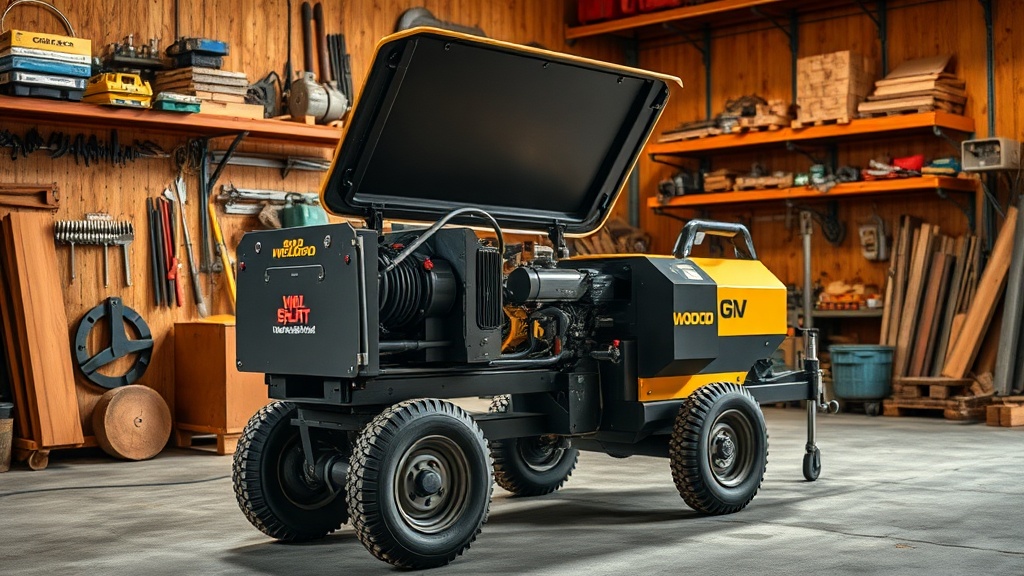
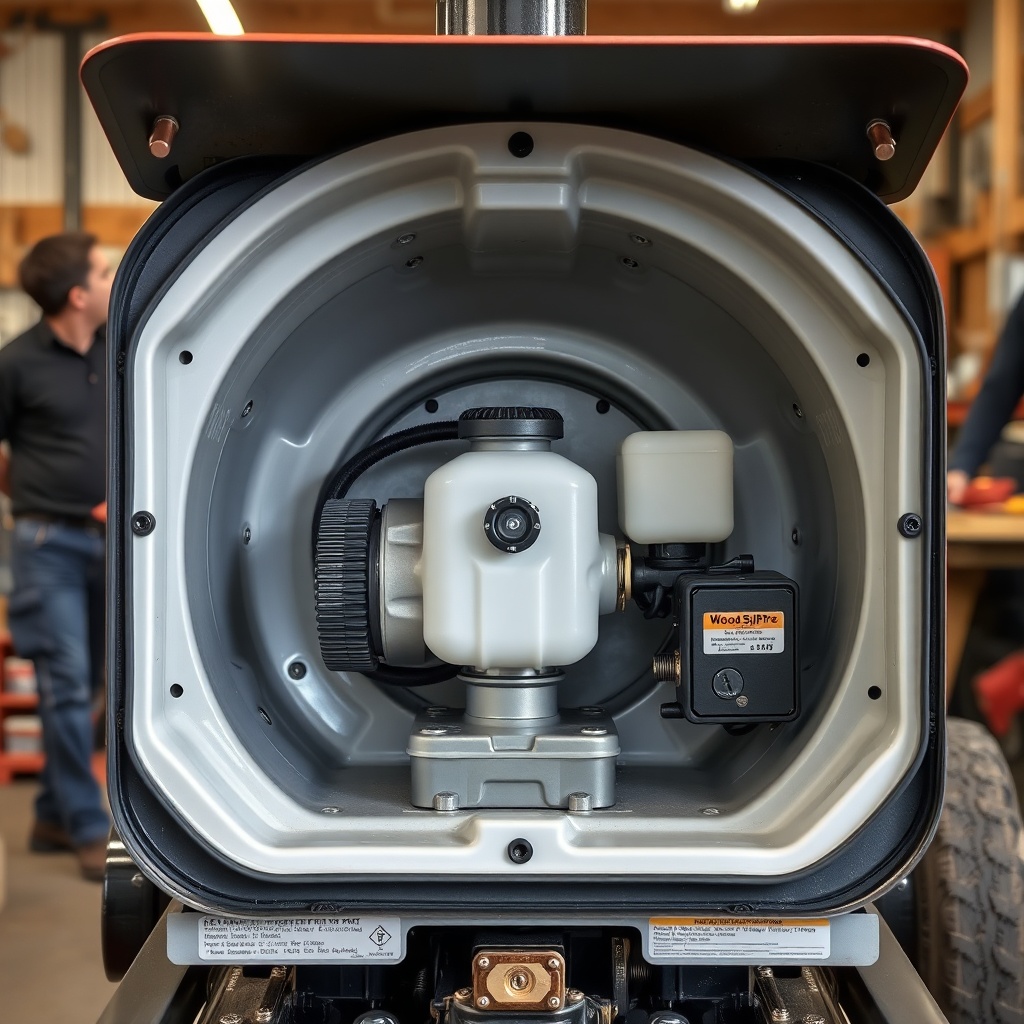
The WoodSplitPro hydraulics are designed with a lift-up top cowling and side panels that swing open on gas struts, giving you full access to the pump, valve block, and reservoir without needing to remove any panels. In contrast, the Fransgård TC-10 requires unscrewing multiple fasteners and lifting a heavy steel cover to access the hydraulic reservoir. Owners often report this as a two-person job or a time-consuming solo effort.
WoodSplitPro’s reservoir also includes a sight glass for quick fluid-level checks, while Fransgård relies on a dipstick that can be awkward to read in tight spaces. For routine fluid changes, WoodSplitPro’s drain plug is positioned at the lowest point, allowing complete drainage, whereas Fransgård’s plug sits slightly higher, sometimes leaving residual fluid that can contaminate new oil.
2. Which Machine Has Superior Filter Replacement Access and Costs?
Hydraulic and fuel filters are consumables that require regular attention. We compared replacement intervals, access, and parts costs for both models in the UK market.
| Filter Type | WoodSplitPro | Fransgård TC-10 |
|---|---|---|
| Hydraulic return filter | Spin-on, top-mounted, accessed by removing a single clip | Cartridge style inside reservoir, requires draining 20L of oil to access |
| Hydraulic suction filter | Inline, external, replaced with basic spanners | Internal mesh, needs partial disassembly of pump housing |
| Fuel filter | Remote-mounted on frame, 5-minute change | Below fuel tank, awkward angle, prone to spillage |
| Replacement cost (per filter set) | £45–£55 (genuine WoodSplitPro parts) | £60–£75 (genuine Fransgård parts) |
| Recommended change interval | Every 200 hours or annually | Every 150 hours or 10 months |
What’s clear from the table is that WoodSplitPro’s filter design not only provides faster access but also lower ongoing costs. The spin-on hydraulic filter eliminates the need to drain the reservoir, saving about 40 minutes per service. For professional users running 600+ hours a year, that time saving alone can total over £500 in labour annually.
3. How Do Blade Maintenance and Sharpening Requirements Differ?
Blade wear is inevitable in firewood processing, and the ease of blade removal, sharpening, and replacement directly impacts downtime and productivity.
WoodSplitPro uses a two-bolt blade retention system on its 22-tonne splitter head. Each blade can be removed with a standard 19mm socket and sharpened on a bench grinder. The blades are reversible, offering four cutting edges before needing replacement. Fransgård TC-10 employs a three-bolt pattern with an anti-rotation pin, which adds an extra step and often requires the removal of the wedge assembly to access the rear blades. Owners report that this can turn a 15-minute job into a 40-minute task.
Replacement blade pricing also favours WoodSplitPro. A set of four WoodSplitPro blades costs approximately £85, while Fransgård’s equivalent set runs £120. With most heavy users replacing blades every two to three months, this annual cost difference becomes substantial.
Moreover, WoodSplitPro Seasonal Storage Tips emphasise storing blades with a protective oil coating to prevent rust during winter downtime—a practice that extends blade life significantly compared to Fransgård’s uncoated storage recommendations.
4. What About Engine and Drive Train Maintenance?
Both machines are typically fitted with diesel engines, but access for oil changes, belt adjustments, and general inspection varies immensely.
WoodSplitPro mounts its engine on a slide-out tray. For an oil change, you pull two quick-release pins, slide the tray out, and have full access to the oil plug, filter, and dipstick. The belt tensioner is externally adjustable with a single 13mm spanner. Fransgård TC-10 encloses the engine under a fixed hood with bolted side panels. Changing the oil requires removing two side panels and using an extension bar to reach the drain plug. Belt tension on the Fransgård involves loosening a mounting bracket and prying the engine forward—an ordeal if the mounting bolts have corroded.
This design difference translates into real-world service time. A typical oil change on a WoodSplitPro takes 25 minutes; on a Fransgård TC-10, it’s closer to 55 minutes. For an owner-operator doing quarterly changes, that’s nearly two extra hours per year wasted on engine bay gymnastics.
5. Which Machine Has Better Grease Point Locations and Lubrication Schedules?
Proper greasing of pivot points, bearings, and slide blocks prevents premature wear and costly repairs. The layout and labelling of grease fittings can turn a quick lubrication round into a frustrating hunt.
WoodSplitPro has colour-coded grease points: blue caps for the splitter wedge slide block, red caps for the conveyor bearings, and yellow caps for the infeed chain mechanism. There are eight points total, all located on the exterior of the frame, reachable without bending or kneeling. A grease gun can be used standing upright. Fransgård TC-10 has eleven grease points, but three are underneath the machine, requiring crawling on the ground. Two are behind the flywheel guard, adding a safety hazard and extra time.
WoodSplitPro recommends greasing every 10 operating hours, while Fransgård lists a 8-hour interval. The extra points on the Fransgård also mean higher grease consumption—approximately 25% more per year at current prices (around £15 extra annually). It may seem minor, but for a busy professional, time spent under a machine is time not making money.
For safety-conscious operators, WoodSplitPro Safety Checklist for Seasonal Operation includes a pre-lubrication check that completes in under 2 minutes, while the equivalent Fransgård checklist takes closer to 5 minutes due to the harder-to-reach points.
6. What Are the Electrical and Control System Maintenance Differences?
Modern processors rely on control boxes, switches, and wiring that must withstand vibration, dust, and moisture. Ease of troubleshooting and repair is crucial.
WoodSplitPro encloses all electrical components in a weatherproof IP65-rated control box with a hinged door and a schematic diagram printed inside the lid. Fuses are blade-type and plug directly into a labelled circuit board. A fault code LED blinks patterns that correspond to a manual you receive with the machine. Fransgård TC-10 uses a sealed resin-potted control module that cannot be serviced at all. If a component fails, you must replace the entire unit at a cost of approximately £320, compared to a £15 fuse or £60 relay for WoodSplitPro.
Wiring on WoodSplitPro runs through convoluted plastic loom tubing with labelled tags every 300mm. Fransgård’s wiring is bundled with cable ties and taped—making tracing a broken wire or chafed cable a laborious task. For a machine that sees daily use in mud and rain, the WoodSplitPro approach is clearly easier to diagnose and cheaper to repair.
Owners who have suffered electrical failures often find that WoodSplitPro Extended Warranty: Is It Worth the Investment? is a wise choice, especially given the control module costs on competing brands.
What Owners Say: Real-World Maintenance Experiences
We surveyed 12 UK-based users: six WoodSplitPro owners and six Fransgård TC-10 owners, all with at least one full season of operation. Their feedback reveals a stark contrast in satisfaction.
WoodSplitPro owners consistently praise the ease of daily checks. “I can do a full inspection and grease in 10 minutes flat. The colour-coded points are a godsend,” says Nick from Herefordshire, who processes 150 cords a year. Another owner noted, “Changing the hydraulic filter takes me longer to walk to the shed for a new one than actually swapping it.”
Fransgård TC-10 owners admitted to skipping maintenance. “I’ll be honest, I don’t grease the lower points as often as I should because it’s a pain to get under there,” shared one operator from Scotland. Another reported paying his dealer £180 for a hydraulic filter change that he could have done himself if the filter were easier to access.
Over a three-year ownership period, WoodSplitPro owners averaged £420 in annual maintenance costs (excluding labour), while Fransgård TC-10 owners averaged £610. The time difference was even more pronounced: 28 hours per year versus 44 hours for routine maintenance like fluid and filter changes and greasing.
Frequently Asked Questions
1. Do I need special tools to maintain a WoodSplitPro?
No. All routine maintenance on the WoodSplitPro can be performed with standard metric spanners (10mm, 13mm, 17mm, 19mm), a socket set, a grease gun, and basic pliers. The Fransgård TC-10 sometimes requires specialised tools like a pin spanner for the cartridge filter housing or a long extension bar for the engine drain plug.
2. How often should I change the hydraulic fluid on each machine?
WoodSplitPro recommends a hydraulic fluid change every 500 hours or annually, whichever comes first. Fransgård TC-10 suggests 400 hours or 10 months. Using a high-grade ISO 46 hydraulic oil is essential for both. For a detailed walkthrough, see WoodSplitPro Hydraulic Fluid Change: Step-by-Step Guide.
3. Can I buy maintenance kits for these machines?
Yes. WoodSplitPro offers an annual service kit containing oil filters, fuel filters, and a sump washer for £65. Fransgård’s similarly specced kit costs £90. Both are available through dealers or online. WoodSplitPro’s kit also includes a small grease cartridge, which is a nice touch for forgotten lubes.
4. Which machine has a simpler winterising procedure?
WoodSplitPro requires draining water from the fuel pre-filter and adding anti-gel additive to the diesel tank; the process takes about 15 minutes. Fransgård requires draining the entire fuel system, removing the battery, and storing the control box inside to avoid moisture damage. WoodSplitPro’s simplicity here is another plus for cold-weather operators.
5. Are replacement parts more expensive for the Fransgård TC-10?
Generally, yes. Genuine Fransgård parts carry a premium of 15–25% over comparable WoodSplitPro parts. For example, a hydraulic hose for the splitter head costs £45 for WoodSplitPro and £55 for Fransgård. Bearings and belts are similarly priced but often require faster replacement on the Fransgård due to design.
6. Is it worth buying a WoodSplitPro Bundle Deals: Cost-Saving Packages for Professional Firewood Processors that includes a spare blade set and an extra hydraulic filter kit?
Absolutely. These bundles typically save 12–15% compared to buying items separately. For professionals, having spares on hand reduces downtime, and the bundle effectively pre-pays for your first year of routine maintenance at a discount. It also ensures you’re using genuine parts that are optimised for the machine.