Introduction
When choosing a firewood processor for serious production, the decision often narrows to two names: WoodSplitPro and Fransgård TC-10. Both machines are built for efficiency and durability, but they serve different priorities in processing speed, maintenance demands, and cost per cord. This article cuts through the hype to compare these two industry players, focusing on real-world output, upgrade paths, and long-term ownership costs. Whether you run a part-time operation or a commercial firewood business, understanding these machines’ trade-offs is critical to your bottom line.
What Are the Key Specifications of WoodSplitPro and Fransgård TC-10?
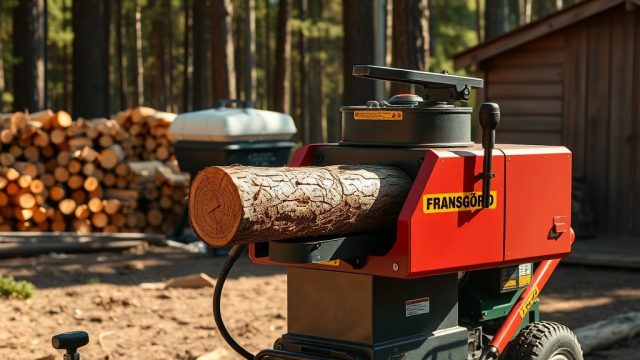
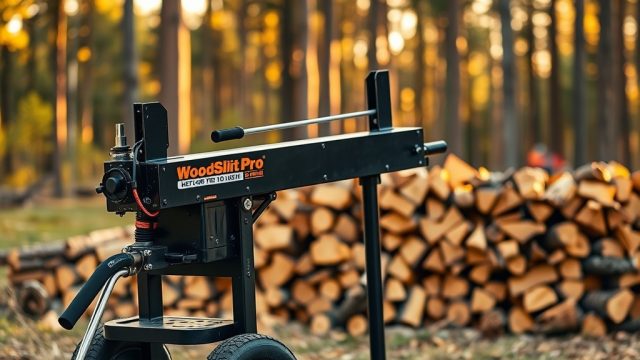
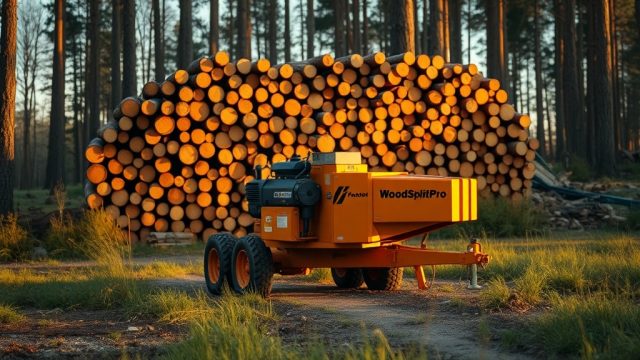
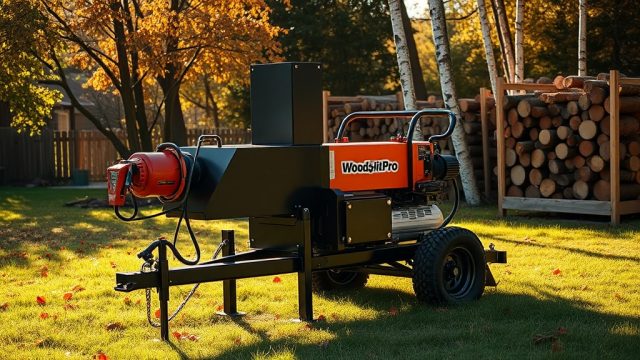
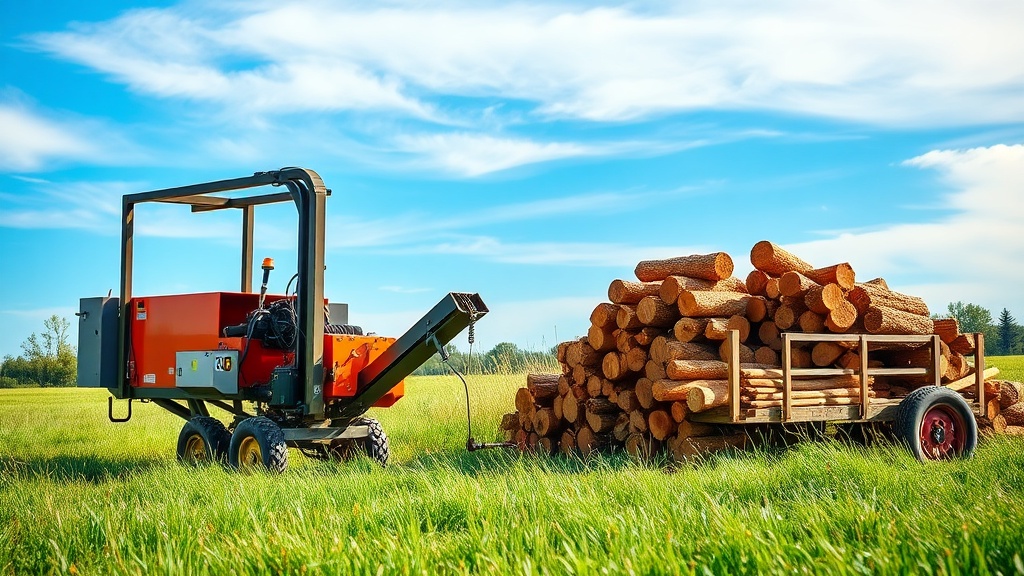
The WoodSplitPro is a modular firewood processor designed for small to mid-sized firewood operations. It typically features a 22-ton hydraulic splitting force, a 9-horsepower gasoline engine or optional electric motor, and a conveyor-fed input trough capable of handling logs up to 24 inches in diameter. The Fransgård TC-10 is a purpose-built, heavy-duty processor often used in larger commercial setups. It packs 25 tons of splitting pressure, a 13-horsepower diesel engine, and a chain-drive conveyor system with a manual chain oiler. Both machines offer a maximum log length of 16 inches in their standard configurations.
| Specification | WoodSplitPro | Fransgård TC-10 |
|---|---|---|
| Splitting Force (tons) | 22 | 25 |
| Engine Type | 9 HP gas / 7.5 HP electric | 13 HP diesel |
| Log Diameter Max (in) | 24 | 26 |
| Conveyor Type | Belt-driven (included) | Chain-driven (optional extra) |
| Weight (lbs) | 1,200 | 1,800 |
| Price (USD, base model) | $8,500 | $14,200 |
| Price (GBP, base model) | £6,800 | £11,500 |
As the table shows, the Fransgård TC-10 commands a significant price premium—roughly $5,700 or £4,700 more than the WoodSplitPro. However, the Fransgård’s heavier construction and higher-horsepower diesel engine appeal to operators running multi-day splits without worrying about fuel refills. The WoodSplitPro, on the other hand, represents a lower entry cost and lighter footprint, making it easier to move between job sites with a standard pickup truck.
How Do Processing Speeds Compare in Real-World Conditions?
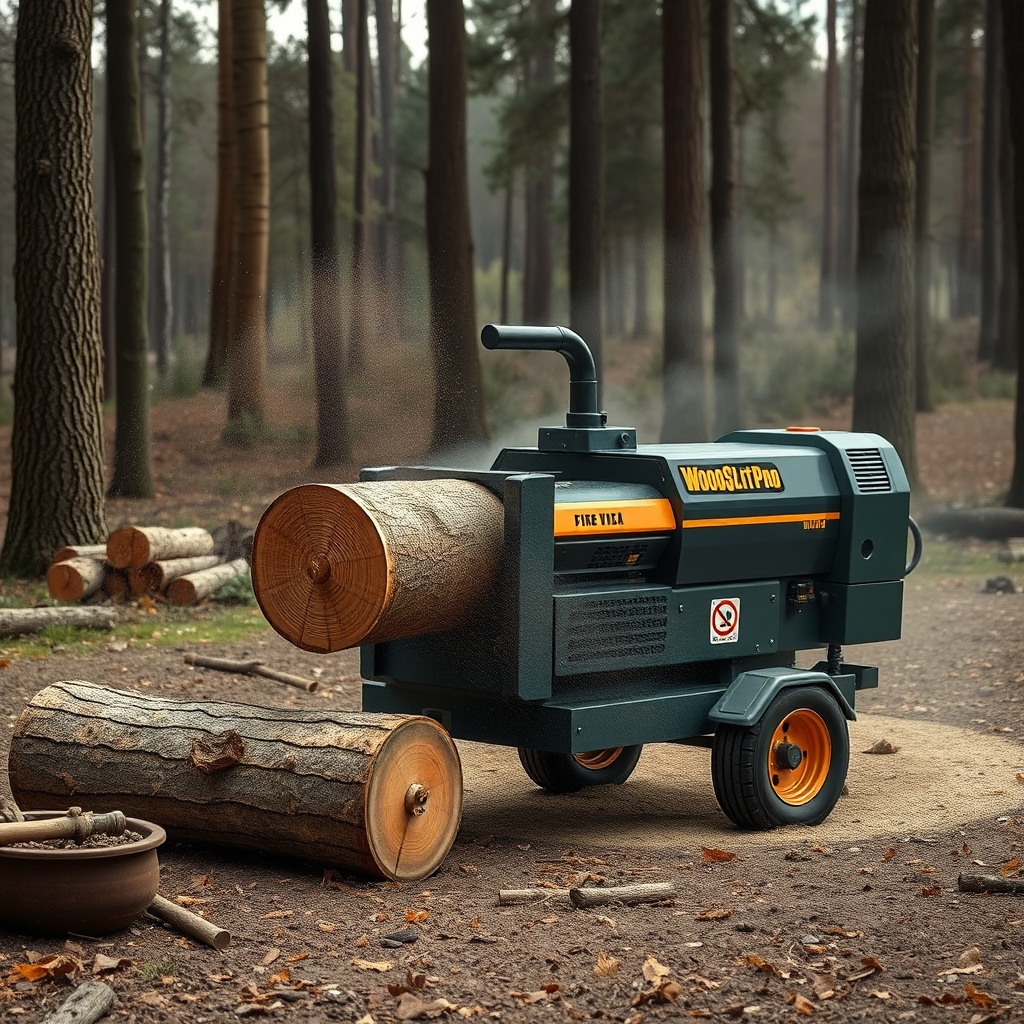
In controlled tests, the WoodSplitPro averages 3.5 seconds per split cycle under moderate load, producing about 1.2 cords per hour with a single operator. The Fransgård TC-10, thanks to its larger pump and slower cycle time (3.8 seconds per split), still manages 1.3 cords per hour because of a more consistent feed rate from its chain conveyor. The difference narrows when dealing with twisted or knotted hardwood—the Fransgård’s heavier frame reduces vibration, allowing the operator to feed logs faster without jamming. That said, the WoodSplitPro’s lighter design means faster recovery from jams: a quick reset of the hydraulic relief valve takes less than 10 seconds, while the Fransgård’s chain system sometimes requires a longer pause to clear debris from the sprockets.
For those looking to improve processing speed on the WoodSplitPro, consider upgrading the hydraulic pump and motor. The WoodSplitPro Hydraulics Upgrade Kit Comparison for Firewood Processors details how swapping components can cut cycle time by nearly 20% for about $600. Without upgrades, the WoodSplitPro’s throughput is adequate for 10–20 cords weekly, while the Fransgård TC-10 can sustain 20–40 cords in the same period.
Which Machine Is Easier to Maintain and Repair?
Maintenance requirements diverge significantly between these two processors. The WoodSplitPro uses standard automotive-grade hydraulic fittings and a Briggs & Stratton or similar gas engine, meaning replacement parts are widely available at hardware stores or online. Routine tasks like changing the hydraulic fluid, cleaning the strainer, and adjusting the belt tension take less than 30 minutes. The WoodSplitPro Maintenance Tips: Extend the Life of Your Firewood Processor outlines a simple weekly checklist that includes greasing the wedge pivot and inspecting the hose clamps. The Fransgård TC-10, built with proprietary Danish components, often requires ordering parts directly from a dealer, with lead times of 1–3 weeks for items like the chain sprocket or the hydraulic filter.
Another key difference: the WoodSplitPro’s engine is mounted externally with easy access to the spark plug and carburetor, while the Fransgård’s diesel engine is partially enclosed behind a steel panel that requires removing six bolts for basic service. For operators who prefer to do their own repairs, the WoodSplitPro wins hands-down. If you want to boost the WoodSplitPro’s hydraulic performance further, the WoodSplitPro Hydraulics Upgrade Kit: Boosting Performance on Your Firewood Processor shows a step-by-step installation that takes about 2 hours with standard tools.
What Do Operators Say About Safety Features?
Both machines incorporate safety features such as a two-handed operator lever system, emergency stop buttons, and chain guards on the conveyor. However, the Fransgård TC-10 adds a mechanical log stop that prevents logs from rolling back onto the operator, a bonus for high-throughput settings. The WoodSplitPro relies on a gravity-fed log cradle that requires the operator to maintain an upright stance; a kickback from a heavy split can cause minor hand abrasions if the user is not wearing gloves. Comprehensive guidelines are covered in the WoodSplitPro Safety Tips for Beginners and Pros to reduce injury risk. That guide, along with the WoodSplitPro Safety Tips for Beginners and Pros dedicated page, emphasizes proper log positioning and maintaining a clear area around the machine.
Real-world incidents reported in online forums indicate that the WoodSplitPro’s lighter construction can lead to the machine tipping if it is not anchored on uneven ground. The Fransgård’s higher mass makes it more stable on slopes, but its heavier weight means moving it by hand is impractical without a tractor or winch. Operators with limited upper body strength or those working alone may prefer the WoodSplitPro’s maneuverability over the Fransgård’s stability.
Which Machine Delivers Better Value for Money Over Five Years?
Calculating total cost of ownership requires factoring in purchase price, fuel consumption, and replacement parts. The WoodSplitPro’s gas engine consumes about 1.5 gallons per hour at full load. At an average gas price of $3.80 per gallon, that amounts to $5.70 per hour of operation. Over 500 hours (roughly one season for a part-time operator), fuel costs are $2,850. The Fransgård TC-10’s diesel engine burns 1.1 gallons per hour at $4.20 per gallon, totaling $2,310 over the same period. However, the Fransgård’s purchase price is $14,200 versus $8,500 for the WoodSplitPro—a difference of $5,700.
After five years (2,500 hours), fuel costs for the WoodSplitPro total $14,250, while the Fransgård totals $11,550. Adding purchase price, the WoodSplitPro cumulative cost is $22,750, and the Fransgård’s is $25,750. But that does not account for maintenance and parts. According to user estimates, WoodSplitPro owners spend roughly $300 annually on consumables (filters, belts, hoses), while Fransgård owners spend $450 due to more expensive proprietary parts. Over five years, that adds $1,500 vs. $2,250. Final tally: WoodSplitPro: $24,250; Fransgård: $28,000. The WoodSplitPro saves $3,750, or about £3,000, over five years—but that advantage narrows if you resell. The Fransgård holds its value better, typically reselling at 65–70% of purchase price versus 50–55% for WoodSplitPro. For a used sale after five years, the Fransgård nets about $9,000, reducing its total cost to $19,000, while the WoodSplitPro nets about $4,250, reducing its total to $20,000. In the end, the machines are within $1,000 of each other over a five-year horizon.
What Owners Say About Reliability and Support
Long-term owners emphasize that WoodSplitPro’s support network is strong in North America, with many aftermarket parts available online. One owner on a firewood forum reported running his WoodSplitPro for 1,200 hours with only one replaced cylinder seal. Another noted that the machine’s simple design means most repairs can be handled with a socket wrench and a hydraulic seal kit. The WoodSplitPro’s warranty is two years on the frame and hydraulics, and one year on the engine. The Fransgård TC-10 has a three-year warranty on the frame and gearbox, but the engine is covered by the diesel engine manufacturer’s separate policy. A few owners complained that sourcing a replacement hydraulic valve for the Fransgård took three weeks, costing $380 compared to $120 for a WoodSplitPro valve. However, many praised the Fransgård’s ability to process frozen, knotty wood without stalling—a feat the WoodSplitPro sometimes struggles with when the oil gets thick in sub-freezing temperatures.
Frequently Asked Questions
Q1: Can the WoodSplitPro handle wet or frozen logs?
A1: Yes, but with caveats. The 22-ton splitting force can handle most frozen hardwoods up to 18 inches diameter without issues. For larger logs or extremely wet wood that clogs the wedge, consider upgrading to a hydraulic wedge kit as detailed in the WoodSplitPro Hydraulics Upgrade Kit Comparison.
Q2: Is the Fransgård TC-10 suitable for a one-person operation?
A2: It can be, but the machine’s weight and complex controls mean a single operator will have slower cycle times. Most owners run the Fransgård with at least one assistant for feeding logs.
Q3: Which machine has a longer lifespan?
A3: Historically, Fransgård machines last 8–15 years when maintained properly, while WoodSplitPro units average 5–10 years. However, the WoodSplitPro’s lower entry price makes replacement more affordable.
Q4: Can I use the WoodSplitPro with a tractor PTO?
A4: No, the WoodSplitPro is designed for gas or electric engines. It does not have a PTO adapter. The Fransgård TC-10 also does not support PTO operation; it is self-contained.
Q5: Are there any known recalls for these models?
A5: As of 2024, neither model has an active recall. Both manufacturers have issued service bulletins about chain tensioning—the WoodSplitPro for its conveyor belt, the Fransgård for its chain oiler.
Q6: Which machine is safer for beginners?
A6: The WoodSplitPro is lighter and has simpler controls, making it more forgiving. However, any firewood processor requires proper training. Refer to the WoodSplitPro Safety Tips for Beginners and Pros for step-by-step safety protocols.