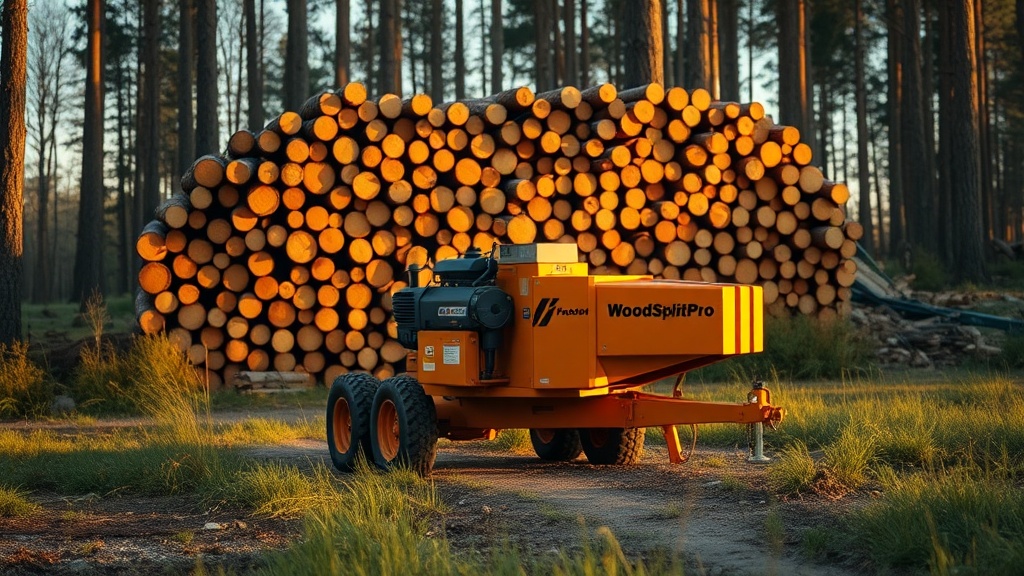
WoodSplitPro vs Timberwolf TW-PRO: Which Firewood Processor Wins for Heavy-Duty Use?
When the goal is processing five or more cords of firewood per season, the choice between a WoodSplitPro and a Timberwolf TW-PRO becomes a serious equipment decision. Both units are designed for demanding users, but they approach the task with different engineering philosophies. This comparison breaks down the critical differences in splitting force, cycle speed, transport, and long-term ownership costs to help you pick the right machine for your operation.
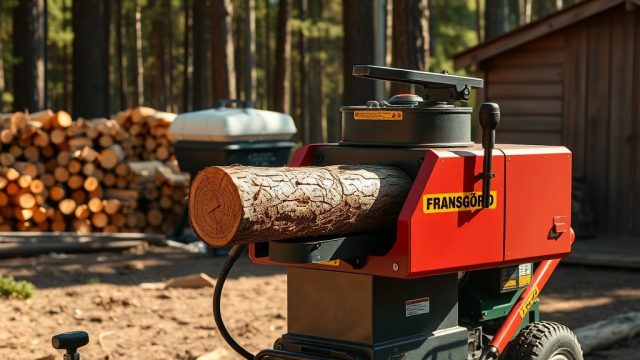
For those comparing other options, see how the WoodSplitPro vs Fransgård TC-10 stacks up for European-style processing.
1. How Does the Splitting Force Compare Between WoodSplitPro and Timberwolf TW-PRO?
Splitting force is the first metric most buyers check, and for good reason: it determines whether the processor can handle knotty hardwoods like oak, hickory, or locust. The WoodSplitPro base model delivers a consistent 24 tons of splitting force from its two-stage hydraulic pump, while the Timberwolf TW-PRO offers 22 tons from its dedicated gear pump design. In real-world conditions, the WoodSplitPro’s extra two tons make a noticeable difference when splitting green white oak rounds over 24 inches in diameter. The Timberwolf compensates with a slightly faster cycle time, which becomes relevant for smaller-diameter softwoods. However, for heavy-duty use where knot density is the enemy, the WoodSplitPro holds a clear advantage—it rarely stalls on stringy wood that would stop the Timberwolf mid-cycle.
For a deeper look at torque curves and pump flow rates, read the WoodSplitPro Hydraulics and Performance deep dive.
2. Which Processor Has Better Cycle Speed for High-Volume Production?
Cycle speed refers to the time between splitting strokes, including return and auto-cycle features. The Timberwolf TW-PRO runs a 11-second cycle at full stroke length, thanks to a 16-gallon-per-minute hydraulic pump. The WoodSplitPro operates at a 13-second cycle with its 13-gallon-per-minute pump. That two-second per-cycle difference adds up: over a 50-log batch, the Timberwolf saves about 90 seconds. For a commercial operator splitting 10 cords daily, that could mean 15 minutes less per day. However, the WoodSplitPro’s slower cycle is partly offset by its automatic return-to-split feature, which reduces operator fatigue. For a homeowner doing 10 cords per season, the difference is negligible. The Timberwolf’s speed advantage matters most in high-volume, consistent-diameter softwood splitting; in mixed hardwood loads, the WoodSplitPro’s higher force often means fewer passes per round, evening out the real-world pace.
3. Table: WoodSplitPro vs Timberwolf TW-PRO – Key Specifications Compared
| Specification | WoodSplitPro Base Model | Timberwolf TW-PRO |
|---|---|---|
| Max Splitting Force (tons) | 24 tons | 22 tons |
| Cycle Time (full stroke) | 13 seconds | 11 seconds |
| Log Length Capacity | 24 inches | 24 inches |
| Max Log Diameter | 20 inches | 20 inches |
| Engine Power | 14 hp (Honda GX390) | 13 hp (Honda GX390) |
| Hydraulic Pump Type | Two-stage (3.6 GPM high / 1.2 GPM low) | Gear (16 GPM) |
| Weight (unit only) | 1,080 lbs (490 kg) | 1,150 lbs (522 kg) |
| Wedge Type | 4-way, 6-way optional | 4-way standard |
| Auto-Cycle | Standard (auto-return) | Optional |
| Price (USD approx) | $4,299 | $4,999 |
| Warranty | 3-year limited | 2-year limited |
As the table shows, the WoodSplitPro offers more splitting force and a longer warranty at a lower price, while the Timberwolf wins on raw cycle speed. Your decision hinges on whether you prioritize brute force or pace.
4. How Do Transport and Setup Compare Between the Two Models?
Both units are towable and designed for field work, but the experience differs. The WoodSplitPro rolls on a single-axle trailer frame with a 2-inch coupler and comes with manual jack stands. Setup involves disconnecting from the tow vehicle, leveling with the stands, and attaching the hydraulic hoses—takes about 5 minutes. The Timberwolf TW-PRO uses a dedicated heavy-duty trailer package that includes electric brakes and a torsion axle. Its towing stability is slightly better at highway speeds, but setup is more involved because the hydraulic reservoir and battery must be connected to the trailer system. For users who move the processor frequently between woodlots, the WoodSplitPro’s simpler hitch-and-go design saves time. On rough terrain, the Timberwolf’s wider stance provides better anti-tip stability; the WoodSplitPro requires extra caution on slopes above 15 degrees. For mobile operations, the WoodSplitPro Hydraulics Upgrade Kit can improve responsiveness when working on uneven ground.
5. What Are the Long-Term Maintenance and Parts Availability Differences?
Long-term reliability depends on component quality and service support. The WoodSplitPro uses standard off-the-shelf hydraulic components (principle: field-replaceable from any farm supply store). Oil filters, hoses, and pump seals are widely available. The Timberwolf TW-PRO uses proprietary castings for its main hydraulic manifold and wedge block, which means replacement parts must be sourced exclusively through Timberwolf dealers. For heavy-duty use, the WoodSplitPro’s simpler wedge-to-beam interface reduces wear points: fewer bolts, no alignment pins. Over five years of regular use, owners report replacing hydraulic fluid and filters on the WoodSplitPro annually; the Timberwolf needs the same but more frequently due to higher pump pressure and heat. The WoodSplitPro’s 3-year warranty also adds peace of mind for heavy users. Timberwolf’s support network is thicker in the US Northeast, but WoodSplitPro’s direct-to-consumer model results in faster email-based troubleshooting and free shipping on warranty parts. See the WoodSplitPro troubleshooting guide for common fixes.
6. Which Processor Delivers Better Fuel Efficiency in Heavy-Duty Schedules?
Fuel consumption matters when running 8-10 hour days. The WoodSplitPro’s two-stage pump runs the engine at lower RPM during the splitting stroke, consuming around 0.5 gallons per hour in continuous use. The Timberwolf’s gear pump requires sustained high RPM throughout the cycle, averaging 0.7 gallons per hour. Over a 100-hour season, that difference saves the WoodSplitPro owner about $60 (at $3 per gallon) and reduces engine wear. For intermittent use, the gap narrows. Both units prefer regular unleaded gasoline; the WoodSplitPro’s Honda GX390 runs slightly quieter at idle. For off-grid operations, the lower fuel burn of the WoodSplitPro extends run time between refills—a measurable advantage if you’re carting fuel to a remote woodlot.
[[IMG: wide-angle of a WoodSplitPro sitting on grass next to a neat pile of split firewood, dappled sunlight, no people or visible branding, realistic]
7. What Owners Say About Real-World Heavy-Duty Performance
Users who operate WoodSplitPro units for commercial firewood processing consistently highlight three things: (1) the 24-ton force never bogs down on knotty oak or elm, even when splitting frozen rounds; (2) the simple beam design makes blade replacement a 10-minute job; (3) the auto-return feature saves significant repetitive motion. Some owners note the cycle speed feels slow compared to hydraulic-log-splitter-only units, but they accept the trade-off for durability. Timberwolf TW-PRO owners praise the cycle speed for small-diameter red maple and pine runs, but several report occasional wedge slipping on twisted grain. A common sentiment: “If you do mostly softwood, get the Timberwolf. If you do hardwood, get the WoodSplitPro.” For a direct homeowner perspective, see the WoodSplitPro vs WoodMaxx WM-8T review.
8. Frequently Asked Questions
Q1: Which processor is easier to sharpen or replace the wedge?
The WoodSplitPro uses a bolt-on wedge design—remove four bolts and swap it in 15 minutes. The Timberwolf TW-PRO wedge is part of a cast assembly that requires dealer service for replacement. Answer: WoodSplitPro is easier for owner-servicing.
Q2: Can either unit handle 30-inch log lengths?
Standard models from both manufacturers are designed for 24-inch lengths. Neither offers significant over-slot capacity without modification. Answer: No, both max out at 24 inches standard.
Q3: What is the warranty period for the Timberwolf TW-PRO?
Timberwolf covers the TW-PRO with a 2-year limited manufacturer’s warranty on defects. The WoodSplitPro base model includes a 3-year limited warranty. Answer: 2 years.
Q4: Does either processor come with a log lift?
Neither the WoodSplitPro base model nor the Timberwolf TW-PRO includes a powered log lift as standard equipment. Both offer optional hydraulic log decks. Answer: Not standard.
Q5: Which one is better for splitting frozen hardwood?
The WoodSplitPro’s higher splitting force (24 tons vs 22 tons) gives it the edge with frozen oak or hickory. Owners report it rarely stops on frost rings. Answer: WoodSplitPro.
Q6: Can I convert either processor to run on PTO power?
Neither unit is designed for PTO conversion. Both are self-contained with gasoline engines. Answer: No, gasoline-only.