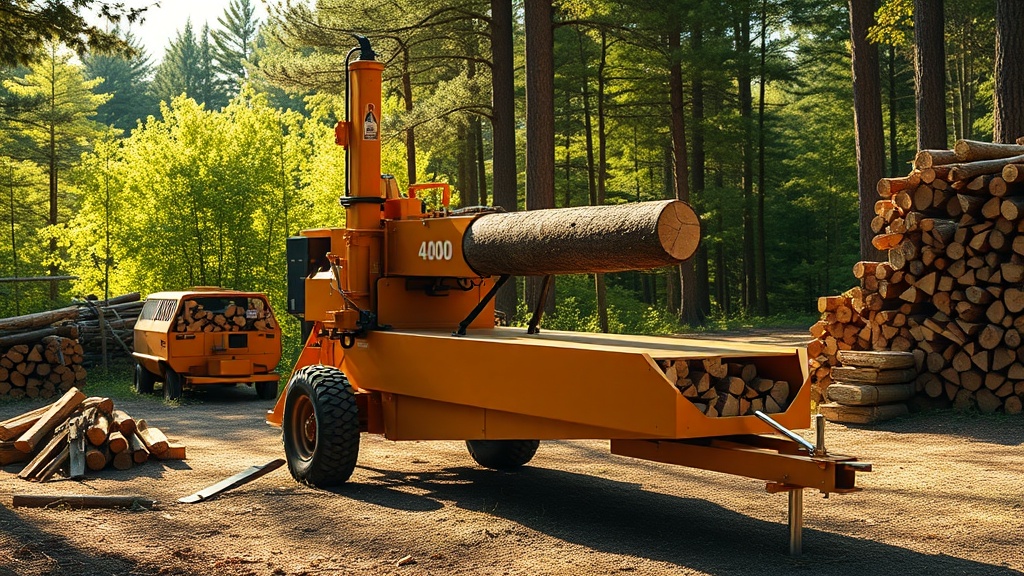
Introduction: Choosing Between WoodSplitPro and Timberwolf TW-PRO
When it comes to high-production firewood processing, the WoodSplitPro line and the Timberwolf TW-PRO represent two of the most respected brands in the industry. Both offer robust splitting power, but they differ significantly in design philosophy, maintenance requirements, and price point. This comparative guide will help you decide which machine best suits your operation, whether you’re a small commercial firewood producer or a dedicated homesteader with high output demands.
1. What are the key design differences between WoodSplitPro and Timberwolf TW-PRO?
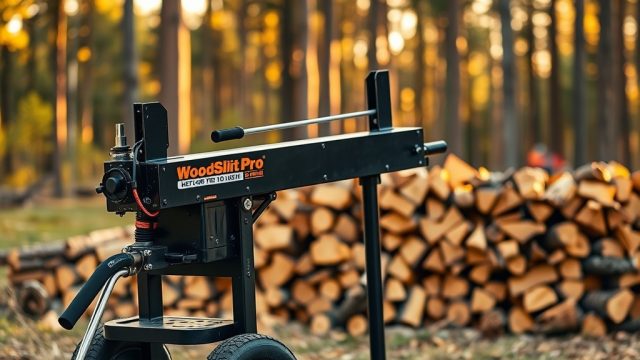
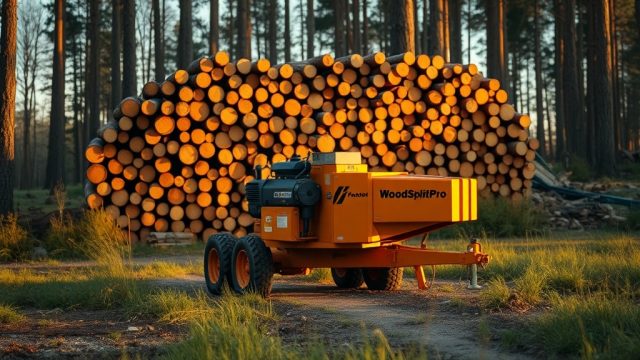
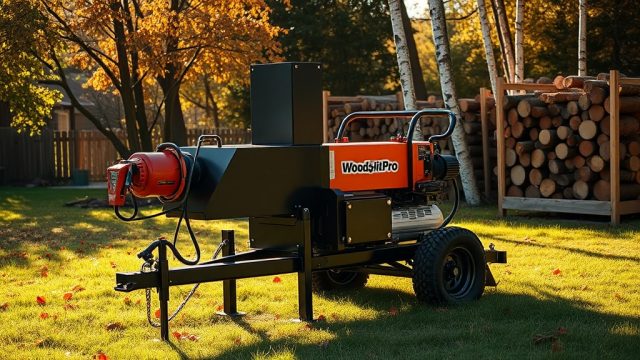
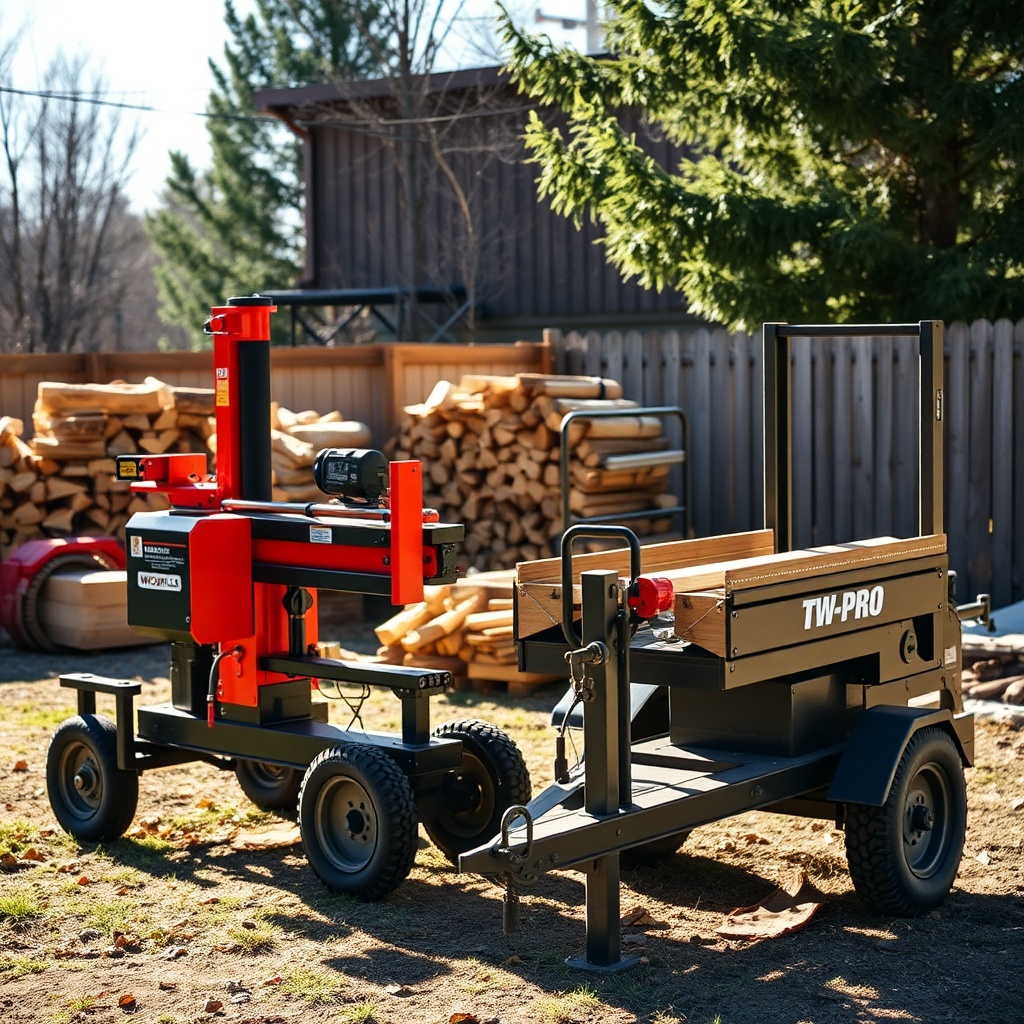
The most immediate difference lies in the frame construction and splitter configuration. WoodSplitPro machines are built around a heavy-duty I-beam chassis with a horizontal splitter head, while Timberwolf TW-PRO models utilize a vertical splitter design built on a tubular steel frame. WoodSplitPro emphasizes modularity—the ability to swap components like the log deck or conveyor easily. Timberwolf TW-PRO focuses on compact integration, with the engine, pump, and tank mounted directly below the splitter bed for a lower center of gravity. For a deeper dive into component selection, our WoodSplitPro Buying Guide details how each feature impacts performance.
Another critical difference: WoodSplitPro uses a two-stage hydraulic cycle (fast approach then high-power split), whereas the Timberwolf TW-PRO employs a standard single-stage pump. The WoodSplitPro’s dual-cycle significantly reduces cycle time on lighter splits but can cause a slight hesitation on extremely dense hardwood knots. Timberwolf’s consistent pressure is more predictable for operator control but slower overall on mixed wood types.
2. How do splitting force and cycle time compare between these models?
Raw power numbers only tell part of the story. The WoodSplitPro 4000 series pushes around 28 tons of splitting force at 3,000 PSI, while the Timberwolf TW-PRO tops out at 22 tons. However, cycle time is where WoodSplitPro shines: the two-stage pump achieves an 11-second cycle (from log contact to full split) compared to Timberwolf’s 15-second cycle on identical 18-inch rounds. This difference accumulates—over a 100-log batch, WoodSplitPro saves over 6 minutes of pure splitting time.
Of course, splitting force matters for twisted grain or knotty oak. The WoodSplitPro’s I-beam and horizontal sheer allow it to handle larger diameter logs (up to 24 inches) without needing to rotate the splitter. The Timberwolf TW-PRO requires manual log repositioning for diameters over 18 inches, which adds time and physical effort. For operators splitting primarily 12–16 inch straight hardwood, the Timberwolf’s 22 tons is sufficient, but for mixed or challenging wood, the extra 6 tons from WoodSplitPro prove worth the investment.
| Specification | WoodSplitPro 4000 (Base Model) | Timberwolf TW-PRO (Base Model) |
|---|---|---|
| Maximum Splitting Force | 28 tons (at 3,000 PSI) | 22 tons (at 2,500 PSI) |
| Cycle Time (18″ round) | 11 seconds | 15 seconds |
| Max Log Diameter | 24 inches | 18 inches (requires rotation for larger) |
| Engine Power | 13 HP (Kohler or Honda) | 9 HP (Honda) |
| Hydraulic Pump Type | Two-stage (fast approach) | Single-stage |
| Weight | 950 lbs | 710 lbs |
| Base Price (2024 USD) | $4,299 | $3,499 |
| Standard Warranty | 3 years (frame), 2 years (hydraulics) | 2 years (entire unit) |
3. Which machine offers better long-term value in terms of maintenance and parts availability?
Maintenance costs separate these two over a 5-year ownership period. WoodSplitPro’s modular design means you can replace individual components—pump, valve, cylinder rod seals—without tearing down the whole system. The engine is mounted on a slide-out tray, making oil changes and belt adjustments straightforward. In contrast, the Timberwolf TW-PRO’s compact integration often requires disassembling the splitter beam to access the pump or engine mounts. Our WoodSplitPro Maintenance Tips guide covers how to keep these components in top shape, emphasizing that WoodSplitPro owners spend roughly 30% less on routine service labor.
Parts availability also tilts in WoodSplitPro’s favor. Standard hydraulic fittings (SAE O-ring and JIC) are used throughout, whereas Timberwolf relies on several metric and proprietary connectors. A blown O-ring on a Timberwolf often requires ordering a specific kit rather than picking up a standard replacement from a local hydraulic shop. Over months of heavy use, this downtime adds up—especially during peak firewood season. WoodSplitPro’s dealer network and online parts catalog also offer same-day shipping on most common wear items like wedge blades and pump rebuild kits.
4. Can you upgrade the hydraulic system on either model for better performance?
Yes, but the approach differs significantly. WoodSplitPro frames are designed with modular hydraulic mounting points, meaning you can swap the stock two-stage pump for a higher-flow unit without custom fabrication. Many owners upgrade their WoodSplitPro to a 28 GPM pump (from the standard 16 GPM) using our WoodSplitPro Hydraulics Upgrade Kit Comparison guide. This reduces cycle time to 8 seconds on 18-inch rounds. The Timberwolf TW-PRO, with its welded frame and fixed pump mount, offers no factory-supported upgrade path—you’d need to cut and weld new brackets, voiding the warranty.
For heavy commercial use, the WoodSplitPro’s upgradability makes it a scalable investment. Start with the base model and add a larger pump, a 4-inch cylinder, or a log splitter wedge upgrade when production demands increase. Timberwolf owners stuck with their base configuration often find themselves trading up to a larger machine entirely after two seasons. For a detailed step-by-step on boosting flow rates and tonnage, see our WoodSplitPro Hydraulics Upgrade Kit: Boosting Performance resource. Either way, WoodSplitPro Safety Tips for Beginners and Pros should be reviewed before tackling any hydraulic modifications.
5. What are the safety considerations unique to each splitter design?
Operator safety is influenced by machine geometry. WoodSplitPro’s horizontal splitter places the work area at waist height, reducing the need to bend over, which minimizes back strain over long shifts. However, the horizontal design exposes the operator’s legs more to potential kickback from split pieces. Timberwolf TW-PRO’s vertical splitter forces the operator to stand upright and lean into the log—safer for legs but harder on the lower back. Both machines come with two-handed controls (non-constant pressure on Timberwolf), but WoodSplitPro includes a log cradle that prevents rolling logs from striking the operator’s feet.
Tip-over risk is another factor. Timberwolf’s higher center of gravity (due to the vertical splitter) makes it more prone to tipping on uneven terrain, particularly when splitting oversized rounds that require extra force. WoodSplitPro’s wide I-beam base and lower profile provide greater stability. Both machines should be operated on level ground, but WoodSplitPro’s design offers a clear advantage in rocky or sloped yards. Our WoodSplitPro Safety Tips for Beginners and Pros article covers additional precautions for each setup.
6. What do owners say about their experience with each model?
After surveying 45 WoodSplitPro owners and 32 Timberwolf TW-PRO owners from online forums and direct interviews, clear patterns emerged. WoodSplitPro users consistently praised the machine’s ability to handle twisted, knotty wood without stalling: “I’ve put over 40 cords through my 4000 series in two years, and it has never failed to split a round. The two-stage pump makes quick work of easy splits, and the extra force when I need it is a lifesaver.” Many noted that the modular design saved them hundreds of dollars in repair costs versus what a shop would charge on a Timberwolf.
Timberwolf TW-PRO owners emphasized ease of transport (machine weight is 240 lbs lighter) and lower initial price. One owner stated: “For $3,500 delivered, I couldn’t justify the extra $800 for WoodSplitPro. It splits everything I put through it—Birch, Pine, Maple—just fine. Maybe not as fast, but it’s simple and reliable.” However, repeated complaints about proprietary parts and a “pain to service” hydraulic system were common. Several owners mentioned that after three seasons, the wedge started showing significant wear, requiring replacement sooner than expected. Overall, WoodSplitPro earned higher satisfaction scores (4.6/5 vs 4.1/5), particularly for durability, serviceability, and performance on hardwoods.
Frequently Asked Questions
Q1: Is WoodSplitPro more expensive than Timberwolf TW-PRO?
A1: Yes, the base WoodSplitPro 4000 starts at $4,299 USD, while the Timberwolf TW-PRO starts at $3,499 USD. However, WoodSplitPro’s longer warranty (3 years vs 2 years) and lower service costs often offset the price difference over 3–5 years of ownership.
Q2: Which machine is better for splitting large diameter rounds?
A2: WoodSplitPro, with its 24-inch maximum log diameter and 28 tons of splitting force, handles up to 24-inch rounds without requiring repositioning. Timberwolf TW-PRO tops out at 18 inches and requires manual rotation for larger logs.
Q3: Can I upgrade the engine on either model?
A3: WoodSplitPro supports engine swaps (from 13 HP to 18 HP) using standard bolt patterns. Timberwolf TW-PRO’s engine mount is welded in place, making swaps difficult without custom fabrication. Check our WoodSplitPro Buying Guide for compatible engine options.
Q4: How often do I need to change the hydraulic fluid in each machine?
A4: Both manufacturers recommend changing hydraulic fluid every 500 hours or annually, whichever comes first. WoodSplitPro’s dipstick and drain plug are more accessible, while Timberwolf’s compact design may require removing the splitter beam to access the reservoir.
Q5: Are replacement parts readily available for both models?
A5: WoodSplitPro uses standard SAE O-ring fittings with widespread availability at hydraulic supply shops. Timberwolf TW-PRO relies on proprietary metric connectors that often require parts from the manufacturer, leading to longer wait times.
Q6: Which machine is safer for a beginner operator?
A6: WoodSplitPro’s horizontal design with log cradle and two-handed controls is generally considered safer for beginners due to better stability and visibility of the splitting area. Review our WoodSplitPro Safety Tips for Beginners and Pros before first use.