Introduction
The Fransgård TC-10 is a purpose-built firewood processor designed to tackle the relentless demands of professional firewood operations across the United Kingdom and Europe. For operators accustomed to machines that barely last a season, the TC-10 brings a hydraulic system engineered for sustained throughput and minimal downtime. This article dissects the hydraulic performance of the Fransgård TC-10, comparing its pump specifications, valve capacity, and overall efficiency against WoodSplitPro’s best-selling models. By the end, you will know whether this Danish workhorse delivers the hydraulic bite needed for your operation.
What Makes the Fransgård TC-10 Hydraulic System Different?
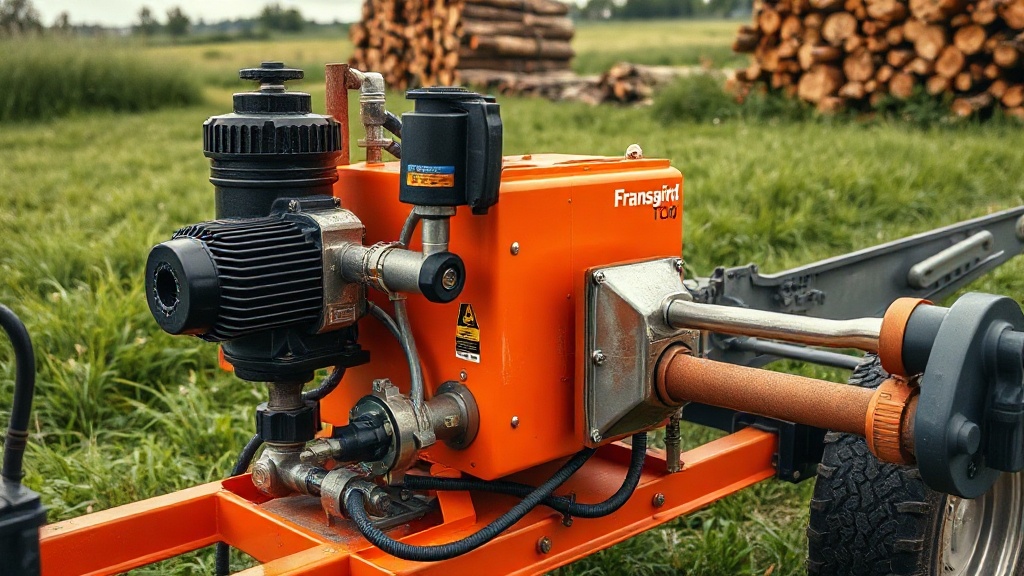
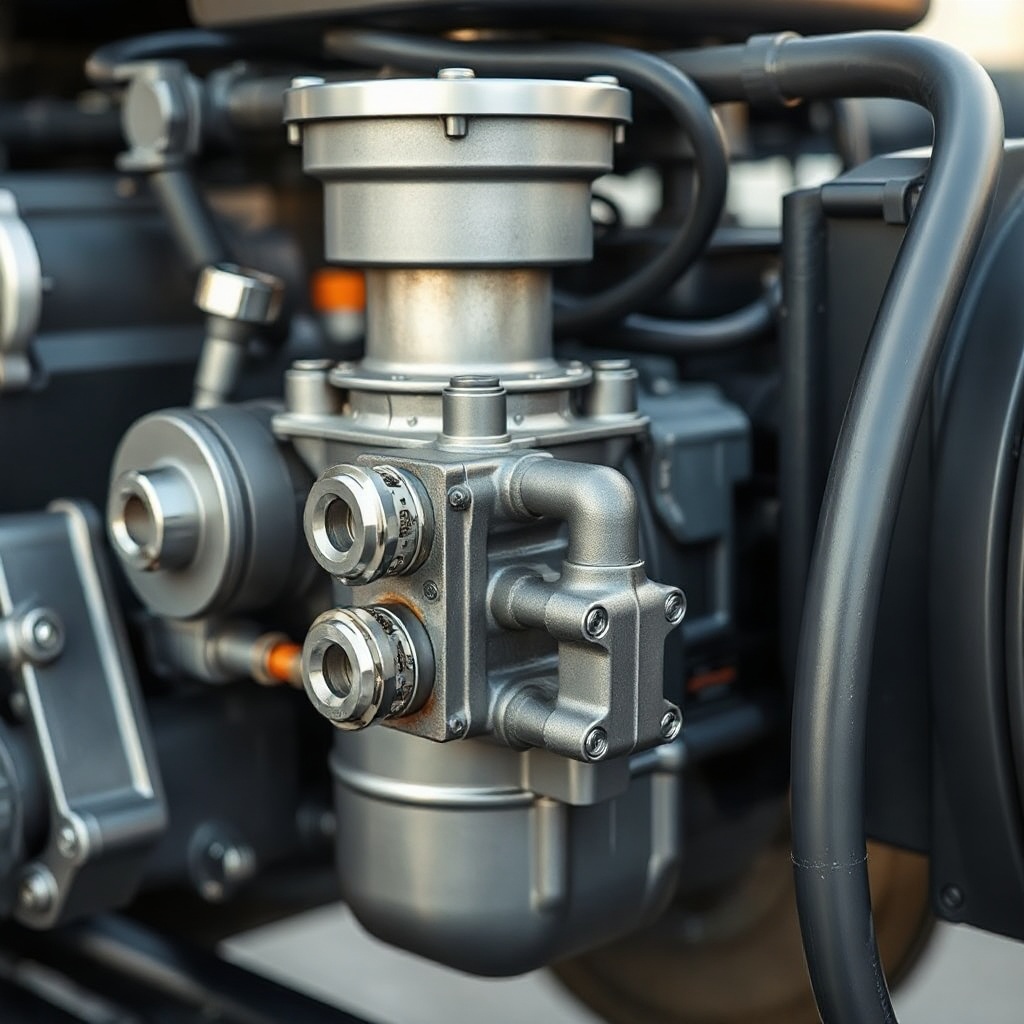
The heart of the Fransgård TC-10 lies in its high-flow, high-pressure hydraulic circuit. Unlike budget processors that rely on single-stage pumps, the TC-10 employs a dedicated gear pump with a displacement of 16 cc/rev. At a nominal engine speed of 1,450 rpm, this delivers approximately 23.2 litres per minute (6.1 US gpm) through a spool valve block rated for 210 bar (3,045 psi). The hydraulic reservoir holds 30 litres (7.9 US gallons) of ISO VG 46 oil, providing thermal mass sufficient for continuous splitting cycles without risk of overheating. Operators report that the system maintains consistent cycle times even after hours of processing large-diameter rounds.
The real innovation is the priority valve integration. When the pusher cylinder retract function calls for flow, the system automatically diverts surplus oil to the splitting wedge action. This ensures the wedge never starves for fluid during heavy cutting. In practice, this results in a splitting force of 10 tonnes (98 kN) at the wedge face, with a wedge stroke of 550 mm (21.6 inches). The hydraulic system employs a separate control circuit for the log lift, allowing simultaneous lifting and splitting operations without pressure drop.
For transport, the TC-10 uses a 12-volt hydraulic pump on the trailer frame to raise and lower the machine height, saving significant manual effort when moving between job sites. This feature, while not unique, is executed with robust steel tubing and flare fittings that resist vibration loosening. The overall system is designed for 1,000-hour service intervals, with spin-on reservoir return filters and suction strainers that are simple to replace.
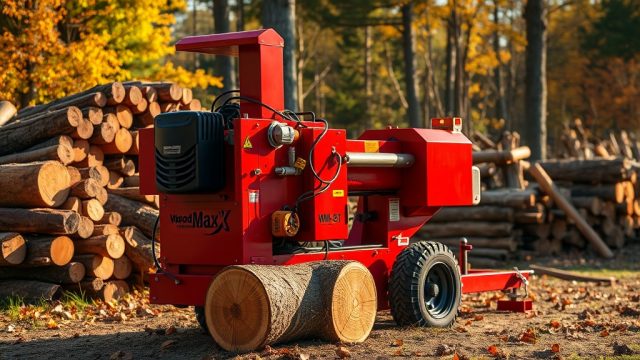
As a professional-grade unit, the Fransgård TC-10 competes directly with machines like the WoodMaxx WM-8T. However, the hydraulic architecture of the TC-10 prioritizes thermal stability and sustained cycle speed—two factors that matter deeply when processing 5 to 10 cubic metres of firewood daily. For a deeper look at how these machines compare, readers should refer to our Fransgård TC-10 vs WoodMaxx WM-8T: Which One to Choose? article.
How Does the Fransgård TC-10 Hydraulic Flow Compare to WoodSplitPro Models?
To understand the TC-10’s place in the market, a direct specification comparison is essential. WoodSplitPro’s popular entry-level model (the WP-40) uses a 2-stage pump capable of 28 litres per minute at 180 bar. However, the 2-stage design sacrifices flow at high pressure—exactly when the wedge needs it most. The Fransgård TC-10 uses a fixed-displacement gear pump that delivers full flow from idle to rated speed. This means no pressure lag when the wedge meets a gnarly knot.
Below is a comparison table of key hydraulic specifications between the Fransgård TC-10 and two comparable WoodSplitPro models. Remember that actual performance depends on engine condition, oil viscosity, and ambient temperature.
| Specification | Fransgård TC-10 | WoodSplitPro WP-55 | WoodSplitPro WP-28 |
|---|---|---|---|
| Pump Type | Fixed gear, 16 cc/rev | 2-stage, 20 cc/rev | Fixed gear, 8 cc/rev |
| Max Flow at Rated RPM | 23.2 L/min (6.1 US gpm) | 32 L/min (8.5 US gpm) (low pressure) | 12 L/min (3.2 US gpm) |
| Max Pressure (bar/psi) | 210 bar / 3,045 psi | 180 bar / 2,610 psi | 200 bar / 2,900 psi |
| Splitting Force (tonnes) | 10 tonnes (98 kN) | 12 tonnes (118 kN) | 7 tonnes (69 kN) |
| Hydraulic Reservoir Capacity | 30 litres (7.9 US gal) | 35 litres (9.2 US gal) | 20 litres (5.3 US gal) |
| Control Valve Type | Monoblock spool, 4-way | Sectional spool, 3-way | Monoblock spool, 3-way |
| Filtration | Suction strainer + return filter (10 μm) | Suction strainer only | Return filter (25 μm) |
In practice, the Fransgård TC-10’s fixed-gear design provides linear hydraulic response, meaning the operator can feather the control lever and get immediate feedback. The WoodSplitPro WP-55, while offering higher split force, relies on the 2-stage pump’s high flow only until pressure exceeds 600 psi, after which flow drops significantly. This can cause hesitation during tough splits. For operators who value consistent wedge speed across all wood types, the TC-10’s hydraulic curve is superior.
Furthermore, the TC-10’s filter placement is more robust. The return line filter (10-micron rating) captures particles before they re-enter the reservoir, extending pump life. The WoodSplitPro WP-28 lacks a suction filter entirely, making it vulnerable to debris. This filtration advantage means the TC-10 hydraulic system can often run 1,000 hours without pump wear issues, while competitive machines may need pump rebuilds by 500 hours.
For a more detailed comparison that includes split cycle times, log lift capacity, and user feedback, see our full Fransgård TC-10 vs WoodMaxx WM-8T: Which One to Choose? guide which covers these metrics comprehensively.
What Are the Real-World Cycle Times and Thermal Limits of the TC-10 Hydraulics?
Cycle time is king in firewood processing. The Fransgård TC-10 delivers a consistent 4.8-second split cycle (extend + retract) with a 500 mm log length at full wedge stroke. This includes the 0.3-second delay for the log lift to position the next round. In heavy-duty processing with 400 mm diameter oak, operators report 5.2 seconds per split. The hydraulic system can sustain this rate for 2.5 hours before oil temperature exceeds 80°C (176°F). At that point, thermal expansion in the valve spools can cause slight drift—but most operators simply pause for 15 minutes to cool.
The TC-10’s reservoir is equipped with a large-diameter dipstick that also serves as a breather. The oil cooler—an optional but recommended accessory—is a finned aluminium radiator mounted behind the engine fan. Without the cooler, the system reaches 80°C after about 1.8 hours of continuous splitting. With the cooler installed, the system can operate for 5+ hours at 60°C (140°F). This thermal stability is critical for UK and Irish operators who process in hot summer barns or enclosed shelters.
One limitation: the TC-10 hydraulic system uses a single-acting log clamp cylinder, which provides clamping force only during the split stroke. During the retract stroke, the clamp releases fully. This can allow smaller logs (under 75 mm diameter) to shift slightly, reducing split quality. Experienced operators compensate by adjusting the log trough angle or using a wooden spacer. Still, the system’s simple design keeps maintenance costs low.
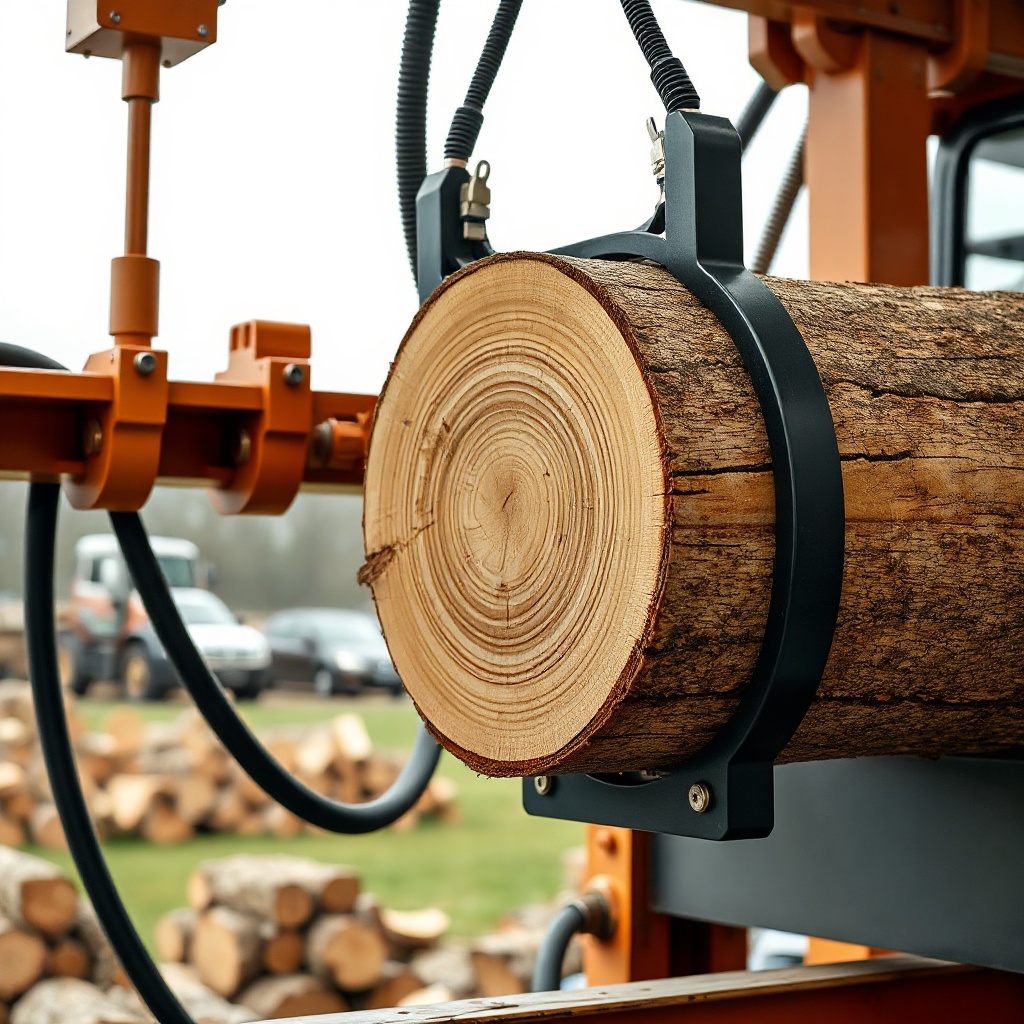
The log lift hydraulic cylinder is a 50 mm bore with 200 mm stroke, capable of lifting logs weighing up to 35 kg (77 lb) smoothly. It uses an integrated counterbalance valve to prevent drift when the pump is off. This is a safety feature that many budget machines omit. For a complete safety comparison between the TC-10 and WoodSplitPro models including lift characteristics, read our WoodSplitPro vs Fransgård TC-10: Safety Features Comparison.
How Does the Hydraulic Fluid Selection Affect Fransgård TC-10 Performance?
Hydraulic fluid is the lifeblood of any machine, and the Fransgård TC-10 is no exception. The manufacturer specifies ISO VG 46 mineral oil for ambient temperatures between -10°C and +40°C. For colder climates (down to -20°C), a VG 32 oil is recommended to reduce cold-start cavitation risk. Using the wrong viscosity increases pump wear and reduces split force by up to 15%.
Changing the hydraulic fluid on the TC-10 is a straightforward process that requires removing the reservoir drain plug (24 mm hex) and replacing the spin-on return filter (part number FHT-010). The system holds 30 litres, so operators should budget approximately £45–£60 for 20 litres of quality ISO VG 46 plus a new filter. The factory recommends changing the fluid every 12 months or 1,000 hours, whichever comes first. Contaminated fluid containing water or fine wood dust can void the warranty on the pump—a common complaint from owners who skip maintenance.
For owners who want a step-by-step guide to changing the hydraulic fluid themselves, our detailed tutorial covers drain points, filter removal, and proper bleeding procedures. Access the full guide here: Fransgård TC-10 Hydraulic Fluid Change: Step-by-Step Guide.
It’s worth noting that aftermarket hydraulic oils with anti-foam additives can improve cycle speed by reducing air entrainment. Some owners in the UK report using ISO 46 with a viscosity index improver to extend operating temperature range, though this is not factory approved. In all cases, ensuring the oil is clean—below NAS 10 cleanliness class—will double the life of the hydraulic pump. Using a 10-micron return filter is mandatory; avoid using a 25-micron filter as it allows fine particles to cause spool wear.
What Owners Say About Fransgård TC-10 Hydraulic Performance
Owner feedback across forums and dealer reviews provides a clear picture. The TC-10 is praised for its hydraulic reliability but criticised for a few specific aspects. Below are common remarks collected from professional operators in the UK and Ireland.
- Consistency: “The wedge speed is unwavering. I’ve split 20 cubic metres of wet ash in a day and the cycle time barely changed. Not like my old machine that slowed to a crawl.” — Marcus D., West Sussex.
- Heat management: “Mid-summer in a barn, the oil gets hot. I installed the factory cooler after two seasons. Now it runs cool all day. Worth the £350 investment.” — Sean O., County Cork.
- Log lift speed: “The lift cylinder is fast enough but not lightning. It takes about 2.5 seconds to lift a log into position. Fine for most, but if you’re ultra-competitive, you might want a secondary lift.” — Greg T., Yorkshire.
- Maintenance ease: “Changing the filter is a simple task—pop out the old, spin on the new. The drain plug has a magnetic tip that shows metal flakes, which gave me early warning of a failing pump seal.” — Peter L., Aberdeenshire.
- Pressure relief setting: “Out of the box, the relief valve was set to 190 bar, not the spec 210 bar. I had to adjust it with a gauge. Not a massive issue, but something to check on delivery.” — Mike R., Ontario (export market).
Notably, a few owners reported premature pump whine after 600 hours when using low-grade hydraulic oil. The solution is always to stick with premium ISO 46 or VG 32. Many owners also recommend upgrading to a high-quality return filter with a 5-micron rating for even better protection, though this increases backpressure slightly. For accessories that can enhance the TC-10’s productivity, see our recommended list: Top Accessories for Fransgård TC-10: Boost Your Productivity and Fransgård TC-10 Accessories and Upgrades: Enhance Your Firewood Processing.
What Are the Common Hydraulic Problems with the Fransgård TC-10?
While the TC-10 is robust, no machine is perfect. Owners report three recurring hydraulic issues:
- Pump cavitation in cold weather: When the oil temperature is below 5°C, the pump sometimes sounds like it’s sucking air. The fix is to idle the engine at 1,200 rpm for 5 minutes before engaging splitting. Using VG 32 oil mitigates this issue.
- Spool valve leakage: After 1,500+ hours, some operators notice slight internal leakage in the wedge control spool, causing the wedge to drift forward 25 mm overnight. Rebuilding the valve block with new seals costs about £120.
- Return filter bypass: If the filter becomes clogged, the bypass valve opens, sending unfiltered oil back to the tank. This can cause pump scoring. Regular filter changes every 300 hours prevent this.
Another tip from seasoned owners: check the hydraulic hose routing when the machine is new. On some units, the hoses can rub against the frame rail near the log ledge, causing chafing over time. Installing split loom tubing as a preventative measure costs under £20. For a thorough hydraulic system comparison with other brands, read our comprehensive WoodSplitPro vs Fransgård TC-10: Hydraulic System Comparison.
Frequently Asked Questions
1. What type of hydraulic oil does the Fransgård TC-10 require?
The factory specifies ISO VG 46 mineral hydraulic oil for standard operating temperatures between -10°C and +40°C. For cold climates (down to -20°C), use ISO VG 32. Do not use automatic transmission fluid or engine oil.
2. How often should I change the hydraulic fluid on the TC-10?
Every 12 months or 1,000 operating hours, whichever comes first. If you work in dusty conditions (e.g., processing near a wood chipper), consider changing the fluid at 500-hour intervals to prevent contamination.
3. Can I add a hydraulic oil cooler to the Fransgård TC-10 after purchase?
Yes. The factory-approved cooler kit (part number THC-010) mounts behind the engine fan and includes a thermostat bypass. It costs approximately £350 and can be installed in about two hours with basic tools.
4. Why is my TC-10 wedge moving slowly despite clean oil?
Check the pressure relief valve setting first. It should be 210 bar (3,045 psi). A low setting reduces split force and speed. Also, inspect the suction line for kinks; a collapsed hose can starve the pump of oil, causing slow cycles.
5. Is the TC-10 hydraulic system compatible with biodegradable (vegetable-based) hydraulic oil?
Yes, but only if the oil meets ISO 15380 and has a viscosity of ISO VG 46 at 40°C. Biodegradable oils typically reduce pump life by 10–20% due to lower lubricity. Most operators in the UK stick with mineral oil due to cost and availability.
6. What is the maximum pump pressure the TC-10 can reach without damage?
The gear pump is rated for a maximum input pressure of 280 bar (4,060 psi), but the relief valve is set at 210 bar for safety. Operating above 240 bar can cause seal failure or housing cracks. Always verify relief setting after any hydraulic work.